Family Involvement and Support at Our Recovery Center in Georgia
When someone starts substance-use treatment, family members or another trusted person may have questions about how to help. Ingrained Recovery provides adult treatment in Eastman, Georgia. Ask Admissions how a support person may be involved, what information can be shared, and how participation is decided.
Table of Contents
Get Effective Treatment Programs at Ingrained Recovery
How Support People Can Help During Treatment
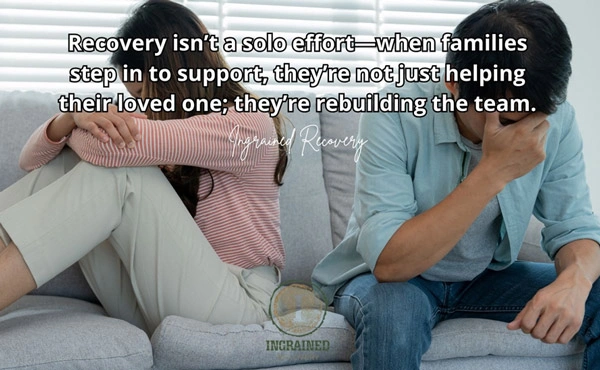
A support person can ask what their role might be during treatment and after discharge. Depending on the situation, that may include learning what to expect, planning transportation to a follow-up appointment, or agreeing on how to stay in touch. The client and care team can discuss who should be involved and what fits the client’s needs and circumstances.
Questions a Support Person Can Ask
- How might I participate during treatment, if the client wants me involved?
- What information can be shared with me?
- How can I support follow-up appointments or other aftercare plans?
- Where can I find education or support for myself?
Talk With Admissions About Treatment

Practical Goals for Family and Support-Person Involvement
Participation can have different goals for different people. Discuss what would be useful and appropriate in the client’s circumstances.
Improve Family Communications
Agree on when and how to check in. Ask what topics are appropriate to discuss during treatment and when to bring up a concern with a professional.
Create More Positive Family Dynamics
Support people can discuss what help they can offer, what they need for their own well-being, and how to respect the client’s choices. A care professional can help with difficult conversations where appropriate.
Educate Loved Ones on Mental Health and Substance Abuse
Ask where to learn about substance-use treatment, co-occurring concerns, and what you might expect as a loved one transitions to aftercare.
Provide Emotional Support for the Family
People supporting a loved one may need their own resources. Options to explore include a support group for family members, educational materials, or an individual appointment with their own provider.
Build a Sober, Calm Home Environment
If the person plans to return to a shared home, talk about routines, transportation, and other practical needs. Ask the care team about alternatives if the living arrangement is uncertain.
Help Find Community Resources
Ask what local or online resources might be helpful to a support person and check the current meeting details directly before attending.
Our Addiction Treatment Center Offers Customized Care

The client’s needs and preferences help determine what support is appropriate. Ask the care team how a support person can be included and how boundaries around communication are handled.
How Family Substance Abuse Treatment Programs Work
Family involvement may look different depending on the person, the treatment setting, and what support is available. At Ingrained, ask how support can be coordinated around adult residential treatment.
Family Therapy Sessions
Ask whether any family sessions are available for the proposed care and how participation would be arranged. Each person can bring questions about what they hope to address.
Psychoeducation and Support Groups
Useful topics can include how substance-use treatment works, ways to respond when plans change, and what resources a support person can use for their own well-being.
Boundary Setting and Codependency Work
Talk through practical boundaries, such as when to check in, what help you can provide, and when to involve a professional.
Who Benefits from Family Rehab?

An adult client may identify a partner, relative, friend, or another trusted person. Who participates depends on the client’s wishes, their circumstances, and what the care team considers appropriate.
Structured Settings of Family Therapy
Support can be coordinated in different settings. Ask the relevant program what is available and what it would take to participate.
Fictional examples. The three scenarios below illustrate different situations. They describe hypothetical experiences.
Fictional Example: Sofia in Residential Treatment
Sofia, 20, entered residential rehab after her heroin addiction caused a steep decline in her mental health. Sofia’s mother, Marta, took the addiction personally and made it all about herself, leading to additional conflict. Marta attended counseling with Sofia at the inpatient treatment center several times a week to work on their relationship and to resolve her own internal conflicts. Most importantly, Marta learned how to support Sofia after the residential program ended.
Fictional Example: Kenny in Outpatient Care
Kenny, 34, failed a random drug test at work. His manager gave Kenny a second chance if he used his company health insurance to get help. Kenny attended an intensive outpatient treatment program several evenings a week after his shift.
He found dialectical behavior therapy especially helpful. Kenny’s husband, Christopher, attended family sessions regularly. Christopher learned to provide the appropriate level of support to Kenny without continuing to enable his abuse of prescription drugs.
Fictional Example: Jana in Alcohol Treatment
Jana, 29, had an AUD that had damaged her liver. She chose a medically supervised detox followed by residential rehab to ensure her physical well-being. As she got stronger, her residential program included family therapy. Jana’s sister, Rose, and her parents had been distraught by Jana’s declining health but had still become her biggest enablers.
Together, they learned how to help Jana continue to regain her physical, emotional, and mental health. They made a difficult choice, deciding to explore recovery residences after residential rehab. They realized they might still enable her drinking.
Other Integrated Recovery Center Services

Adult substance-use treatment may involve medical care, counseling, and planning for continued support. What’s included depends on the person’s needs and the setting.
Medical Detox
An assessment helps determine whether medical detox is appropriate. A treatment team can discuss withdrawal concerns and plan the next step.
Dual Diagnosis Treatment
Dual diagnosis describes a substance use disorder and a mental health disorder occurring together. Tell Admissions about any co-occurring needs you want the care team to consider.
Medication-assisted Treatment
Medication can be part of substance-use treatment when clinically appropriate. Discuss your current medicines and any questions about treatment options with your treating provider.
Individual Counseling and Therapies
Counseling can help people work on treatment goals and practice skills for daily life. Ask what care options are available for the needs discussed at intake.
Complementary Activities in Adult Treatment

Ingrained Recovery has an onsite equine program at our Eastman campus. Ask how activities may fit into an adult client’s care plan and what participation involves.
Our Eastman, Georgia Addiction Treatment Center and Using Your Insurance
Call Admissions for exact benefits, the costs you may be responsible for, and whether the proposed services fit your needs.
Many Forms of Insurance Accepted for Treatment
Contact Ingrained Recovery for Effective Family Rehab Support
Call Admissions to discuss adult treatment and ask how a trusted support person may be involved.