Using the PAWS Worksheet from Ingrained Recovery
Some people notice ongoing changes in sleep, mood, or concentration after withdrawal.
These are sometimes described as post-acute or protracted withdrawal symptoms, or Post Acute Withdrawal Syndrome (PAWS).
This PAWS worksheet can help you record what you notice and discuss it with a healthcare professional. It cannot confirm PAWS or rule out another cause.
Contact a healthcare professional about symptoms that are new, severe, or getting worse. The 0–10 rating helps you describe symptoms to your care team.
How to Use Our Worksheet on PAWS
Make one entry when you notice a concern. Record the date and time, about how long it lasted, what you noticed, and how it affected daily life.
Add any context you want to discuss, what you tried from your care plan or a supportive routine, and what happened next. Add another entry when you need one.
If useful, add a personal intensity rating from 0 to 10, where 0 means none and 10 means the worst imaginable for you.
The number is a personal description, not a diagnostic score or a rule for deciding when to seek care.
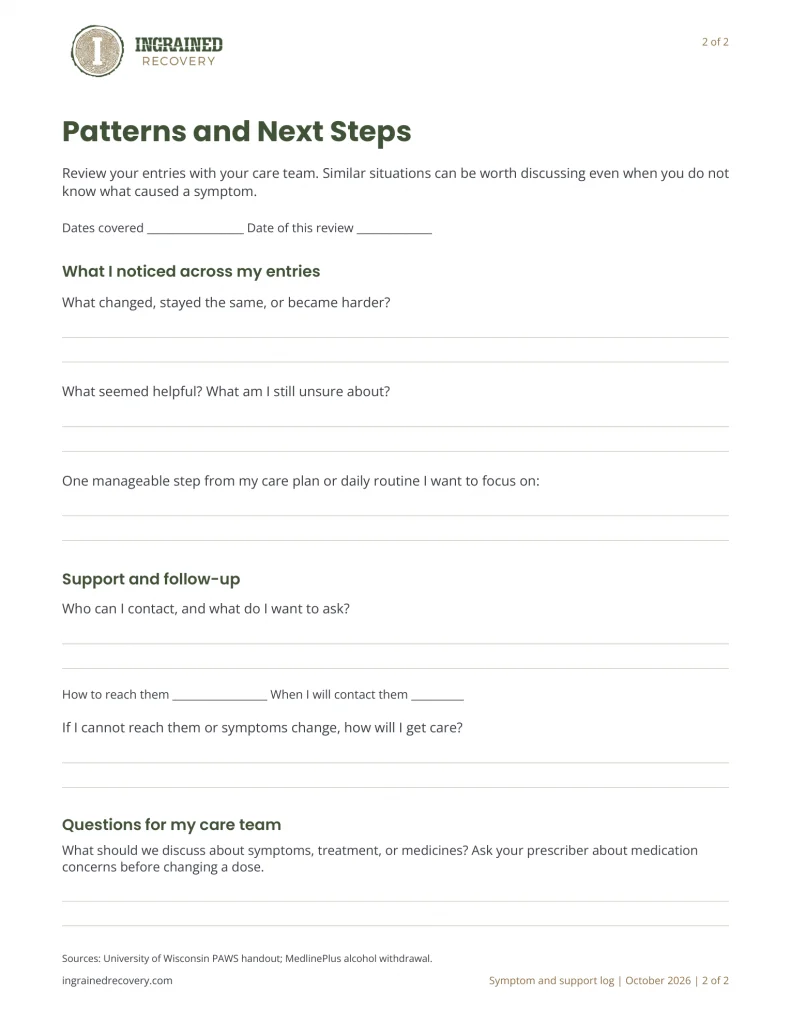
When reviewing your entries, consider what changed or stayed the same, choose one manageable focus from your care plan or daily routine, and record who you will contact.
Use the questions section for concerns about symptoms, treatment, or medicines. Ask your prescriber about medication concerns before changing a dose.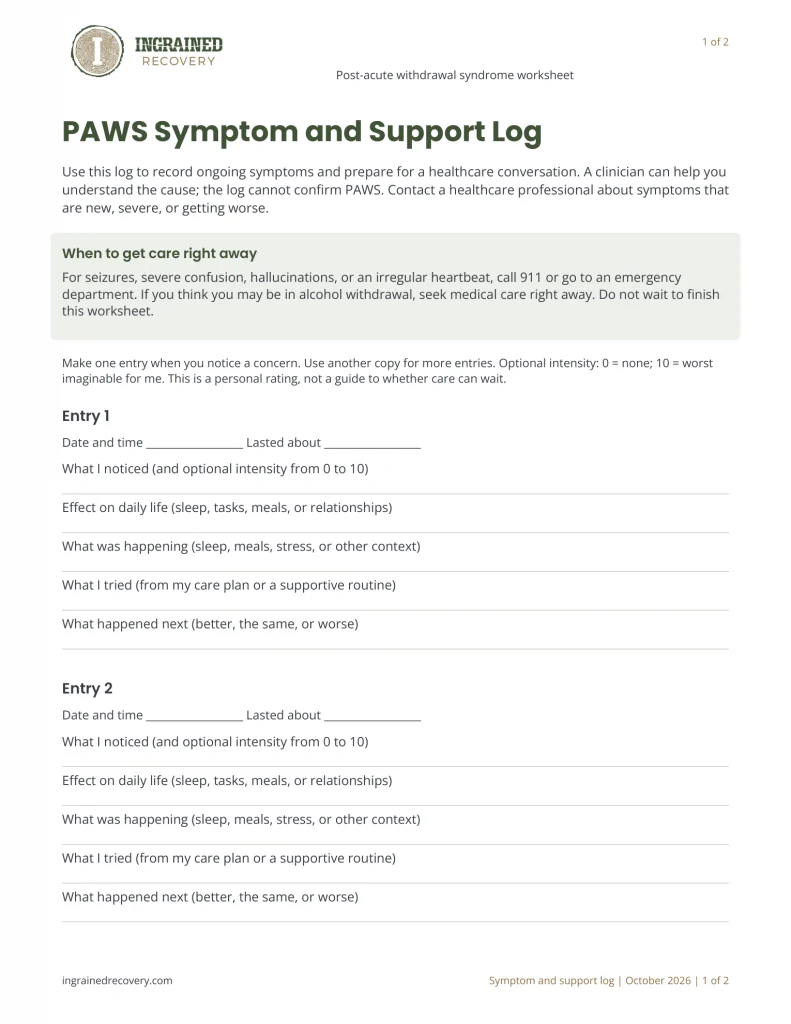
How to Use Our Worksheet on PAWS
Fields for each entry
Use these fields in your own notes. Add a separate entry when you notice another concern.
- Date and time
- Lasted about
- What I noticed (and optional intensity from 0 to 10)
- Effect on daily life (sleep, tasks, meals, relationships)
- What was happening (sleep, meals, stress, other context)
- What I tried (from my care plan or a supportive routine)
- What happened next (better, same, worse)
Review, support, and follow-up
- Dates covered and date of review
- What I noticed across my entries
- What changed, stayed the same, or felt harder
- What seemed helpful and what I am unsure about
- One manageable step from my care plan or daily routine
- Who I will contact or ask for support, how to reach them, and when I will contact them
- How I will get care if they are unreachable or symptoms change
- Questions about symptoms, treatment, or medicines
Table of Contents
Explore Treatment Options at Ingrained Recovery
What to discuss with your healthcare professional
Bring the worksheet to your appointment and describe how symptoms affect sleep, meals, tasks, or relationships. Note changes you have noticed and questions about possible causes. Sleep or mood symptoms can have more than one cause. If substance use and mental health concerns overlap, ask your clinician to assess both (National Institute of Mental Health, n.d.).
Contact Ingrained Recovery for Expert Support
Contact Ingrained Recovery to ask about care options and available support options.
Call Admissions to ask about treatment, aftercare planning, and available support.
Questions about ongoing symptoms
How long can post acute withdrawal symptoms last?
There is no single timetable that applies to everyone. Discuss persistent or changing symptoms with your healthcare professional rather than relying on a deadline.
Does a difficult day mean I am failing?
A symptom entry describes an experience. It does not measure effort, commitment, or the quality of your recovery.
Can the worksheet tell me whether I have PAWS?
No. Use it to prepare information and questions for your clinician; it cannot diagnose the cause of symptoms.
What if anxiety is severe or getting worse?
Contact a healthcare professional for assessment, especially if anxiety is worsening or making daily life difficult. Use your notes to describe what is happening. Seek emergency care if severe symptoms such as seizures or severe confusion occur.
Explore Detox and Rehab Options at Ingrained
References
- University of Wisconsin Hospitals and Clinics Authority. (2021). Post-acute withdrawal syndrome.
- MedlinePlus. (n.d.). Alcohol withdrawal.
- National Institute of Mental Health. (n.d.). Substance use and co-occurring mental disorders.