For people exploring music therapy for addiction recovery, music can offer a starting point when a feeling is hard to explain.
At Ingrained Recovery, our therapist-led music program includes songwriting, drumming, guided listening, and song discussion alongside adult addiction treatment in Eastman, Georgia.
Activities are chosen according to client preferences and therapist judgment. You do not need musical experience to join in. Instruments may be available, although a particular instrument or activity is not guaranteed for every session.
What Is Music Therapy?
Clinical music therapy involves a credentialed professional who uses music within a therapeutic relationship to address a person’s needs. The American Music Therapy Association describes an individualized process, rather than a particular genre, instrument, or collection of songs (American Music Therapy Association [AMTA], n.d.).
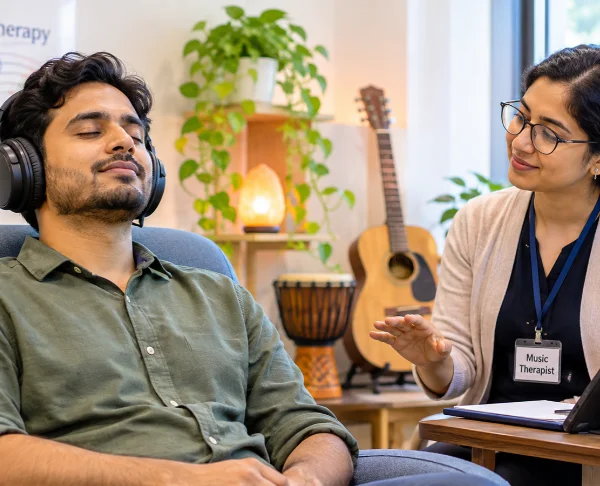
In clinical music therapy sessions, a music therapist assesses the person’s needs, agrees on goals, selects activities, and reviews the response. Someone who struggles to name emotions might use a song as a starting point for conversation. Another person might practice listening and taking turns through a shared rhythm activity.
An approved music therapy education and clinical training pathway prepares professionals for this work. When comparing providers, ask about music-therapy qualifications, including the Music Therapist-Board Certified (MT-BC) credential, and how the practitioner coordinates with the addiction treatment team (AMTA, n.d.).
Music activities and clinical music therapy
Personal listening, singing with friends, and informal instrument play can be meaningful parts of daily life. A treatment program may also offer music-based recreation or wellness activities.
These options do not become clinical music therapy simply because they happen at a treatment center. Sound baths and commercial sound-frequency products also should not be assumed to have the same evidence as a structured music-therapy service. Ask who leads an activity and what it is intended to do.
Get Accredited Treatment Programs at Ingrained Recovery
Potential Benefits of Music Therapy in Addiction Treatment
A 2022 Cochrane review examined 21 trials involving 1,984 people with substance use disorders. It found moderate-certainty evidence that adding music therapy to standard care reduced substance craving and improved motivation for treatment or change compared with standard care alone.
Much of the evidence concerned detoxification and short-term rehabilitation settings (Ghetti et al., 2022).
The review did not establish clear benefits for anxiety, depression, motivation to remain sober, or treatment retention. Evidence for longer-term substance-use outcomes was limited. These findings support a possible role alongside standard care; they do not establish music therapy as a way to prevent relapse or replace other treatment (Ghetti et al., 2022).
The findings concern the specific interventions studied. They do not establish that every music-based program has the same effects, or that a personal recovery playlist reduces cravings or improves treatment outcomes.
Get Proven Detox and Rehab Options at Ingrained

Goals That Music Therapy May Address
The goal is chosen with the person receiving care. Possible areas of work include:
- Emotional expression: finding a way to discuss grief, anger, or uncertainty when ordinary conversation feels difficult.
- Communication: practicing listening, making a choice, and responding to another person.
- Awareness of triggers: noticing how a sound, song, or memory affects feelings and urges.
- Participation in care: connecting a creative activity with a personal reason for seeking treatment.
- Coping practice: trying a planned response to discomfort and discussing whether it helped.
Music can provide a creative outlet for difficult emotions. Writing songs can be a way to convey feelings that are hard to discuss in individual counseling. In a group setting, a client might practice healthy coping skills by asking for a pause or listening to another person’s perspective. These are opportunities to explore with a therapist, rather than a checklist of results.
These are examples of treatment goals, rather than benefits every participant will experience. A clinician should review how an activity affects the individual and change the approach when needed. Music preferences, cultural background, sensory needs, and past experiences all belong in that discussion.
Our Therapist-Led Music Sessions
Our music sessions are led by a therapist with relevant certification. Session choices reflect the client’s preferences, the therapist’s judgment, and the interests of the group. The program can include:
- Songwriting: putting an idea or feeling into original words and music, with support from the therapist.
- Drumming: taking part in rhythm activities at a level suited to the session.
- Guided listening: listening intentionally and exploring the response with the therapist.
- Song discussion: using a song as a starting point for conversation about feelings, experiences, or treatment goals.
Clients do not have to perform a finished song or demonstrate musical skill. Playing instruments is one possible way to participate; guided listening and song discussion offer other routes to self-expression. Musical instruments are available within the program, but access to a particular instrument is not guaranteed. The therapist can choose an activity that fits the people taking part and the resources available.
Preferences, sensory needs, and song-related triggers
We consider music preferences, sensory needs, and songs linked to distress or substance use on a case-by-case basis. The therapist also considers the group’s interests when choosing material and activities.
Tell the therapist if a song, sound, or volume is uncomfortable. Discussing the reaction helps the therapist consider a change in the activity or another way to take part. Individual preferences belong in that conversation even when a session includes other people.
Connecting music with treatment goals
The activity can open a conversation about an emotion, a choice, or a response that matters in treatment. For example, a client might want to discuss a feeling that appeared during listening or an idea expressed through songwriting. The therapist helps connect the experience with the person’s care rather than judging the quality of the music.
Music, Triggers, and Personal Boundaries

A song can carry associations with a place, relationship, or period of substance use. Before an activity, tell the provider about music that feels distressing or closely linked to drinking or drug use.
Useful questions include:
- Can I pause or leave an activity without pressure?
- Can I choose a different song or activity?
- How do you respond if someone becomes overwhelmed?
- Are headphones, quieter instruments, or another setting available?
- How will we review a difficult reaction afterward?
For personal listening, notice the effect rather than judging a song by its title. If listening increases distress or urges to use, pause it and discuss the reaction with a treatment professional or another member of your support system. You do not need to keep a song on a playlist because someone else finds it helpful.
Music and Other Holistic Treatment Options
Music therapy is an additional approach within a broader plan. Assessment, counseling, appropriate medical care, and medications when indicated still need their own place in treatment.
At Ingrained Recovery, we provide adult Residential Treatment and medical detox in Eastman, Georgia. Our addiction treatment includes individual and group counseling and care for co-occurring mental health concerns.
Our equine-assisted programming is another example of an experiential approach used alongside clinical care.
Our music sessions are part of the experiential options available alongside clinical care. Our holistic-care resource provides broader context for complementary approaches. Our team can explain current scheduling and how music-based work may fit an individual treatment plan.
For other options within our residential program, explore art therapy, adventure therapy, and agricultural activities.
During withdrawal or medical instability
Music cannot treat dangerous withdrawal or an overdose. A clinician should assess whether someone is medically ready for an activity and whether noise or group participation is appropriate.
Seizures, confusion, severe breathing problems, or unresponsiveness require emergency medical help. Routine admissions and music-based coping activities are separate from emergency assessment.
Questions to Ask About Music-Based Care

Before choosing a program, consider asking:
- Is this credentialed music therapy, another clinician-led activity, or recreation?
- What qualifications does the person leading it hold?
- How are goals chosen and progress reviewed?
- Is the activity optional, and what alternatives are available?
- How are sensory needs, hearing limitations, and music-related triggers handled?
- What activities are currently available, and how often?
- How are any charges included or billed?
Do not assume insurance covers a service because a residential program offers it. Ask the program and your insurer about the specific benefit, provider requirements, and possible out-of-pocket costs.
Explore Music-Based Support at Ingrained Recovery
Songwriting, drumming, guided listening, and discussion offer different ways to participate in our therapist-led music program. What fits best can change with your preferences and treatment needs.
Call our admissions team confidentially to discuss adult treatment at our Eastman facility and how music-based sessions may fit your care.
Many Forms of Insurance Accepted for Treatment
Frequently Asked Questions
Do I need musical experience?
No. Clinical music therapy is based on a person’s treatment goals, rather than performance skill. A provider can explain beginner-friendly options and adapt the activity.
Is a sobriety playlist the same as music therapy?
No. A playlist is a personal listening choice. Clinical music therapy includes professional assessment, agreed goals, and a therapeutic relationship. Both may involve music, but evidence for one should not be applied automatically to the other.
Can music therapy replace addiction counseling?
Music therapy is generally considered alongside other care. It should not displace indicated counseling, medical treatment, or medication. Ask the treatment team how the approaches work together.
What music-based therapy does Ingrained offer?
We offer therapist-led sessions that can include songwriting, drumming, guided listening, and song discussion. The therapist chooses activities with client preferences and group needs in mind. Ask our team about the facilitator’s specific certification and current session arrangements.
Can I use listening to music to manage stress?
Pay attention to how the music affects you. If listening feels calming, discuss how it might fit your coping plan. If it brings up negative emotions or an urge to use, pause it and ask for support. The same music will not have a calming effect for everyone.
What if music brings up cravings or painful memories?
Tell the provider and pause the activity. A different song, a quieter setting, or another approach may fit better. A difficult response is a reason to adjust the plan, rather than pressure yourself to continue.