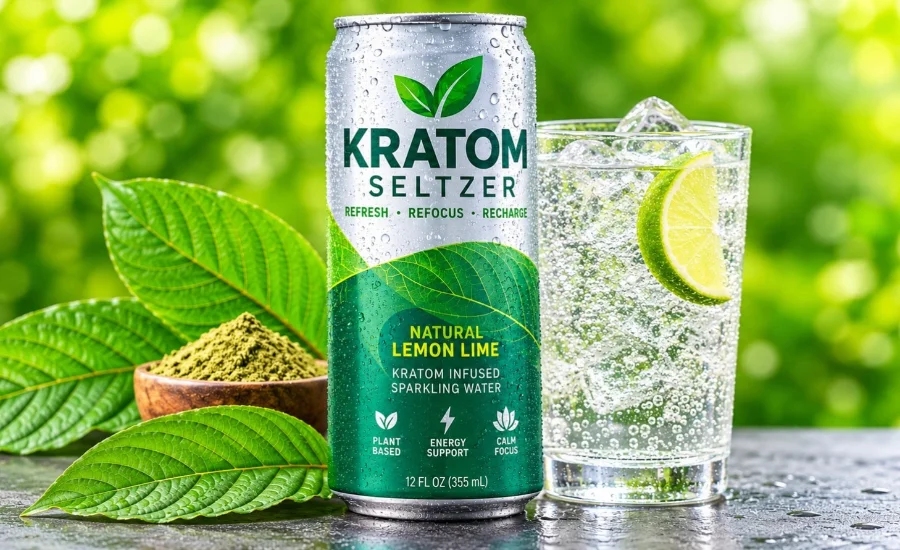
Yes, kratom seltzer can be addictive. A drink containing kratom can lead to physical dependence and, for some people, a pattern of use that becomes difficult to control despite harm.
Being alcohol-free does not make the drink drug-free.
A familiar can or a wellness label can make the health risks easy to overlook. What matters is the active ingredients, their concentration, how often you use them, and how the drink affects your health and daily life. There is no universal number of cans that guarantees safe use.
Kratom Leaf, Extracts, and 7-OH in Seltzers
Kratom comes from the leaves of Mitragyna speciosa, a tree native to Southeast Asia. Kratom-containing beverages may use kratom leaf preparations or concentrated kratom extracts. They should not be assumed to have the same composition or strength as one another.
The FDA explains that two kratom compounds, mitragynine and 7-hydroxymitragynine, interact with opioid receptors. These are parts of the body’s signaling system involved in effects such as pain relief and sedation. Kratom also has effects on other signaling systems (U.S. Food and Drug Administration [FDA], n.d.-a).
A carbonated drink is a delivery format. Flavor, packaging, and the absence of alcohol do not remove the effects of its active ingredients.
Get Effective Detox and Rehab Options
Find Help At Ingrained Recovery
Kratom and enhanced 7-OH products are not interchangeable
7-hydroxymitragynine, often called 7-OH, occurs naturally in small amounts in kratom. Products with added or enhanced 7-OH are a separate concern because of their potent opioid-like effects. The FDA warns that these concentrated products can cause serious harm, including addiction and withdrawal.
Its scientific assessment distinguishes enhanced 7-OH products from botanical kratom and reviews their opioid-related risks (FDA, n.d.-b; Reissig et al., 2025).
Do not assume that every kratom seltzer contains enhanced 7-OH. Also do not assume a can contains only a traditional leaf preparation because the label says “botanical” or “natural.”
The ingredient list and formulation need attention. Drinks found in convenience stores, gas stations, or smoke shops still need the same careful assessment of ingredients and potential risks (FDA, n.d.-b).
Kratom Dependence and Kratom Addiction
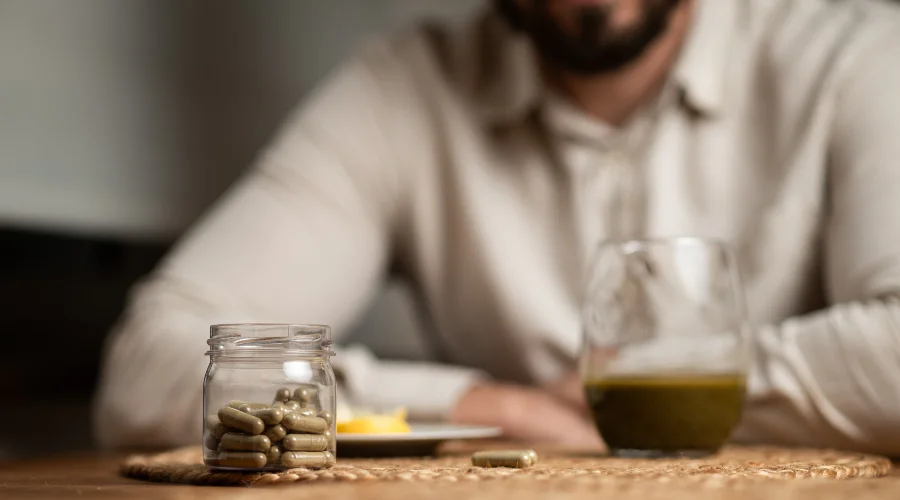
Physical dependence means the body has adapted to repeated exposure. A person who is physically dependent may develop withdrawal symptoms when cutting back or stopping. Kratom dependence and kratom addiction can overlap, but they are not the same thing.
Addiction involves a broader pattern, such as difficulty controlling kratom use, strong urges, or continued use despite negative consequences. A clinician considers the whole pattern rather than diagnosing addiction from tolerance or withdrawal alone.
The FDA has documented kratom-related substance use disorder, including reports of using more than intended, cravings, continued use despite problems, tolerance, and withdrawal. Those reports establish that problems can occur; they do not show that every user becomes addicted or provide a reliable addiction rate for seltzer drinkers (FDA, n.d.-a).
What might a change in use look like?
You might notice that a drink you once chose occasionally has become part of every evening. You may buy more than planned, find it hard to skip a day, or use it to avoid feeling unwell.
Those observations are reasons to ask for an assessment. They do not require you to decide on a diagnosis before seeking help.
Why the Number of Cans Can Be Misleading
“One can” is not a standard dose of kratom. Two drinks can differ in ingredients, serving instructions, extract concentration, and the information provided on the label.
When preparing to speak with a clinician, useful details include:
- The product name and a photograph of the label.
- Whether the label lists kratom, mitragynine, 7-OH, or an extract.
- The container size and listed number of servings.
- How often you drink it and whether use has increased.
- Any other products, medications, or substances you take.
- Symptoms you notice after drinking it or when you miss it.
Do not convert a label’s extract amount into grams of leaf or compare it with someone else’s experience to decide what is safe. A clinician needs the actual product and your health history, and may still be unable to determine its exact contents from the label alone.
Warning Signs Worth Discussing With a Professional

Consider asking for help if you notice:
- Repeatedly drinking more than you intended.
- Trying to reduce use but finding it hard to follow through.
- Strong cravings or spending considerable time obtaining the drinks.
- Continuing despite problems with health, money, work, or relationships.
- Feeling that the drink is necessary to get through ordinary activities.
- Symptoms between uses that prompt you to take more.
A single sign does not establish a disorder. It can still be enough to begin a conversation. Describe what has changed, how long it has been happening, and what concerns you most.
If someone else is worried, specific observations are more useful than labels. “You have seemed unwell when you miss your evening drink” leaves room for discussion. Calling someone an addict may shut that conversation down.
Recognizing Kratom Withdrawal Symptoms
Withdrawal is possible after dependence develops. The FDA reports withdrawal among kratom-related concerns and describes symptoms reported with enhanced 7-OH products, including restlessness, body aches, fatigue, irritability, insomnia, and cold sweats (FDA, n.d.-a, n.d.-b).
There is no dependable withdrawal timetable that applies to every beverage user. Product formulation, frequency of use, other substances, and individual health can change the situation.
Do not assume that a drink sold in a store will be easy to stop. If you use kratom regularly, have symptoms between uses, or also use alcohol, benzodiazepines, or other opioids, ask a clinician about an appropriate plan before making abrupt changes. This article cannot provide a safe home taper or a medication plan.
Mixing Kratom Drinks With Other Substances
Using kratom with other drugs can complicate both its effects and the interpretation of a bad reaction. The FDA notes that reported deaths associated with kratom often involved other substances, making kratom’s contribution difficult to determine (FDA, n.d.-a).
Alcohol, opioids, benzodiazepines, and other sedating products are especially important to disclose. Kratom-related compounds can cause sedation and breathing problems, and combinations require careful assessment. The FDA’s assessment specifically describes respiratory depression and opioid-like dependence with concentrated 7-OH products (Reissig et al., 2025). Do not assume that spacing products apart, choosing a lower-strength drink, or using caffeine makes a combination safe (FDA, n.d.-a).
Give a clinician a complete list of prescription medicines, nonprescription products, supplements, and substances. Avoid changing a prescribed medicine on your own.
For related information, see our resource on kratom and alcohol.
When a Reaction Needs Emergency Care

Severe sleepiness, slow or difficult breathing, seizures, or unresponsiveness require emergency medical help. Do not treat these as routine withdrawal or wait for a treatment-center admissions response. The FDA specifically advises calling emergency services if someone is unresponsive after a 7-OH product (FDA, n.d.-b).
Call emergency services and follow the dispatcher’s instructions. Share what was taken, when, and any available packaging with emergency responders. Do not let an impaired person drive.
Other concerning reactions also deserve prompt medical advice. A healthcare professional can assess the symptoms rather than assuming that every symptom is caused by kratom.
Is Kratom an Approved Way to Treat Withdrawal or Anxiety?
There are no FDA-approved kratom drug products. Kratom has not been approved to treat opioid use disorder, opioid withdrawal symptoms, anxiety, chronic pain, or another medical condition. The FDA advises against using it for medical treatment without established safety and effectiveness (FDA, n.d.-a).
People may describe using kratom to manage symptoms, but a personal report does not establish an effective treatment. Tell a clinician what you hoped the drink would help with. That information can guide a discussion of appropriate treatment for the underlying concern.
If you began using seltzers as an alcohol alternative, you can seek help without treating the experience as a personal failure. Focus on current symptoms, control over use, and the support you need now.
What an Assessment Can Clarify
A professional assessment can review:
- The products you use and your pattern of use.
- Withdrawal symptoms, cravings, and earlier attempts to reduce use.
- Alcohol, medication, or other substance use.
- Medical concerns, sleep, pain, and mental health symptoms.
- Which level of care fits your needs.
- Support and follow-up after the initial treatment plan.
Not everyone needs Residential Treatment or medical detox. The decision should follow assessment, rather than the product’s branding or an online checklist.
Bring labels or photographs if possible. You do not need to know the chemistry or provide a precise dose calculation to ask for help.
Kratom Addiction Treatment and Aftercare at Ingrained Recovery
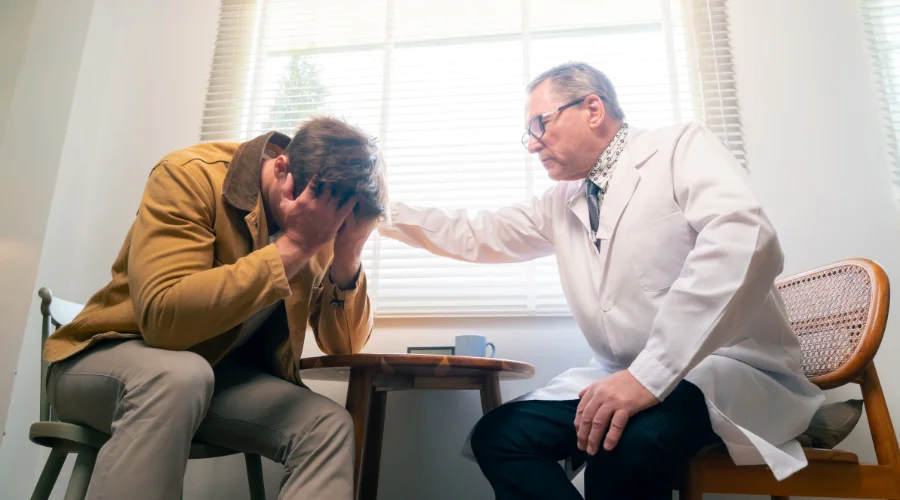
We accept adults seeking help with kratom beverages, other kratom products, and concentrated 7-OH products at our Eastman, Georgia facility.
Our team assesses withdrawal symptoms, medical needs, other substance use, and the level of addiction care appropriate for the individual. The plan may include our Residential Treatment program and mental health care for co-occurring concerns.
All calls are confidential, so please reach out for more details and our support today.
Onsite care and hospital-level needs
We provide onsite withdrawal care when it is appropriate for the client’s condition. If the person’s condition requires hospital-level medical assessment, clearance, or care, that need is addressed before or alongside planning for treatment at Ingrained. The decision always depends on the individual’s condition, rather than the product name alone.
Our kratom-treatment resource and residential treatment overview provide more context about our services.
Medication and aftercare planning
Medication-Assisted Treatment (MAT) is offered when our clinicians determine it is appropriate. Medication choices and monitoring are individualized; the presence of kratom or 7-OH use does not determine one medication plan for every person.
Aftercare planning takes the person’s substance-use concerns, medication needs, and ongoing recovery support into account. As with care for opioid use disorder, continuity after the initial treatment period is part of the planning process. A person’s diagnosis and treatment plan follow assessment.
Taking the next step

Our admissions team can discuss assessment, treatment fit, costs, and benefits verification. Insurance coverage and admission depend on individual circumstances.
Call our admissions team confidentially if kratom seltzer or 7-OH use has become difficult to control or you want help understanding treatment options. Family members can also ask about the admissions process.
Many Forms of Insurance Accepted
Find Help At Ingrained Recovery
Frequently Asked Questions
Can an alcohol-free kratom drink cause addiction?
Yes, it can. Alcohol content and kratom content are separate issues. The active compounds can cause dependence and problematic use even when the drink contains no alcohol.
Are all kratom seltzers the same strength?
No. Product composition and concentration can differ. A can count alone does not provide a reliable comparison, and a label may not answer every question about the formulation.
Does every kratom seltzer contain enhanced 7-OH?
No. Do not assume it does. Naturally occurring trace 7-OH and products with added or enhanced concentrations need to be distinguished.
Can drinking kratom daily lead to dependence?
Repeated use can lead to physical dependence, and there is no universal safe daily can count. If you are experiencing withdrawal symptoms or using more to avoid feeling physically uncomfortable, tell a healthcare professional about the product and your pattern of use (FDA, n.d.-a).
How quickly can addiction develop?
There is no fixed timeline that applies to everyone. Rather than relying on a number of days, watch for increasing use, loss of control, symptoms between uses, and continued use despite problems.
Do withdrawal symptoms mean I need residential care?
Not necessarily. An assessment considers symptoms, other substances, medical needs, and available support. At Ingrained, we assess adults with kratom and 7-OH concerns for appropriate onsite care, hospital-level needs, and an individualized treatment and aftercare plan.
References
- Reissig, C. J., Chiapperino, D., Seitz, A., Lee, R., Radin, R., & McAninch, J. (2025). 7-Hydroxymitragynine (7-OH): An assessment of the scientific data and toxicological concerns around an emerging opioid threat. U.S. Food and Drug Administration.
- U.S. Food and Drug Administration. (n.d.-a). FDA and kratom.
- U.S. Food and Drug Administration. (n.d.-b). Products containing 7-OH can cause serious harm.