Using Healing Sound Therapy for Addiction Treatment
Sound therapy for addiction has gained much attention as a supportive, evidence-based, holistic approach to addiction treatment plans. This supplemental therapy works with traditional treatment methods, including individual counseling, medication-assisted treatment, and life skills programs.
And, yes, sound healing can be helpful in treating addiction, thanks to its calming effects on the nervous system.
The Ingrained Recovery team in Eastman, Georgia, views sound therapy as an alternative modality to promote mindfulness, physical relaxation, and stress relief. We offer it along with an array of complementary science-backed therapeutic practices.
We invite you to continue reading to discover how sound therapy sessions can contribute to lasting recovery when combined with traditional therapy work.
Addiction Recovery and the Mind–Body Connection
True addiction recovery means more than just stopping substance use. The disease impacts the brain and nervous system. It also upsets the body’s natural rhythms, impacting sleep quality and mood. The early weeks of recovery can be stressful, leading to muscle tension and difficulty with emotional regulation.
Effective and lasting treatment should address both the psychological and physiological responses of addiction. Sound therapy offers a structured way to address the mind-body connection by providing controlled sound frequencies and rhythmic sounds in a calming environment. The guided sessions can help with stress reduction and restore balance.
Get Accredited Treatment Programs at Ingrained Recovery
What to Expect When Beginning Sound Therapy for Addiction Treatment
Before starting sound therapy, a clinician assesses whether this holistic wellness option is an appropriate addition to the client’s treatment plan. Most people are good candidates, but there can be exceptions.
For instance, people with sensory disorders like autism have been proven by multiple National Institutes of Health (NIH) studies to find some external sounds overwhelming. For that reason, a sound therapy session may cause more stress than relief for that individual.
When you arrive for each session, the therapist will offer you a comfortable place to sit and encourage you to close your eyes and relax. The goal of each session is to promote relaxation and mental clarity, support emotional healing, and reduce muscle tension without active participation.
Just how relaxing can it be? It’s not uncommon for people to fall asleep during the therapy.
What Are the Types of Sound Therapy Sessions?
Sessions involve the use of sound healing instruments like Tibetan singing bowls and tuning forks that create vibrations that interact with the nervous system by using precise frequencies to stimulate the body’s energy flow and promote emotional release. Clients rest while listening to these soothing sound instruments.
Sound Baths
Sound baths are a popular form of sound therapy where participants listen to sounds produced by various instruments in a group setting.
These sessions often involve clients lying comfortably while a practitioner plays therapeutic instruments like singing bowls or gongs.
Research on sound bathing is limited, but participants in one systemic review of four studies reported less stress and increased well-being after participating.
Get Proven Detox and Rehab Options at Ingrained

Singing Bowls
Some therapists prefer singing bowl sound meditation, an ancient technique that works in either individual or group settings. To make the music, therapists gently strike or circle specially crafted bowls to produce sustained tones and vibrations. The steady sound can quiet distractions and encourage steady breathing and relaxation.
Gong Meditation
Gong meditation allows participants to relax as the practitioner plays the gong, promoting emotional release and physical relaxation. Clients usually rest in the yogic “corpse pose” throughout the experience. It is effective in group and individual sessions.
Drum Circles
In a group setting, drum circles are an interactive form of sound therapy where participants create rhythmic patterns together using drums and percussion instruments. The experience encourages peer connection, while the steady sounds can help lower anxiety levels.
Music Therapy
In some cases, the client listens to soft, soothing music with similar calm beats to achieve enhanced self-awareness and stress reduction. Music therapy invites clients to create music, promoting self-expression and interpersonal skills.
Is Sound Therapy Effective in the Recovery Process?
Sound healing practices are frequently used in wellness retreats and addiction treatment programs.
Research suggests that low-frequency sound stimulation called binaural beats may stimulate healing by influencing the brain waves connected with calmness and focus. While sound healing work is not a standalone treatment method, integrating sound therapy into a comprehensive treatment plan can promote mental wellness and emotional balance.
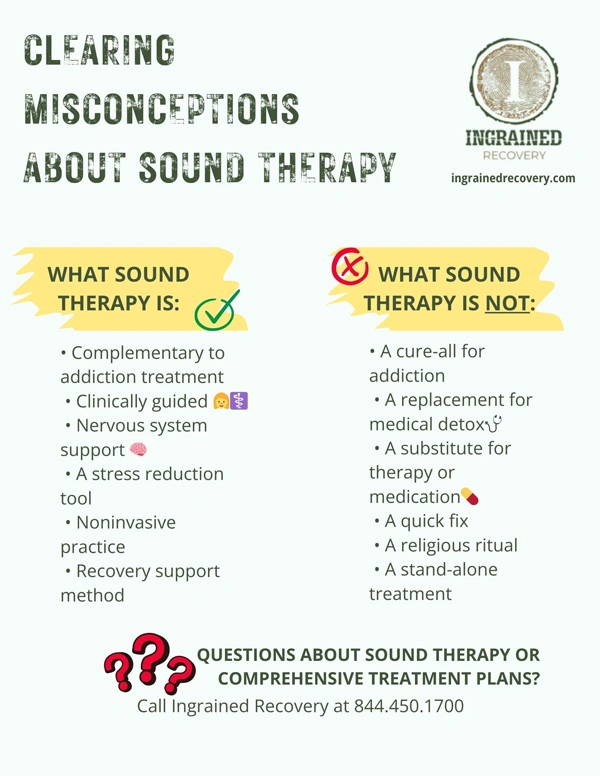
It is important to ensure that sound therapy is used in combination with other treatment modalities for effective addiction recovery.
How Sound Therapy Supports the Healing Process
The sound vibrations of sound therapy support the addiction treatment process by calming an overactive stress response. Sound therapy uses soft rhythms that mimic the body’s natural cycles, which can reduce psychological stimulation and promote emotional recovery.
Sound therapy can also be a good tool for aftercare planning. Once clients understand the benefits, they can listen to the calming vibrations at home to manage stress.
7 Benefits of Sound in Regulating Stress and Cravings

Below are seven specific benefits that show the healing power of sound sessions:
1) Sound Therapy Influences the Nervous System During Recovery
In the first days of substance abuse recovery, the nervous system usually stays in a state of high alert. Therapy work involving sound frequencies can help shift the brain’s responses away from its heightened fight-or-flight patterns. That leads to better emotional regulation and a feeling of general well-being.
2) Stress, the Brain, and Mental Health
Certain sound frequencies connect with the brain waves that dictate stress and focus. Sound therapy promotes healing by supporting mental clarity and calm. This outcome can help clients better prepare to participate in counseling sessions and other treatments.
3) Sound Waves Encourage Deep Relaxation
Sound waves created by singing bowls or tuning forks create vibrations that can relax the muscles and alleviate tension. Reducing stress following a sound session can mean improved emotional health during and after recovery.
4) Supporting Emotional Well-Being Through Healing Sound Practices
Drug or alcohol addiction can lead to a decline in healthy emotional expression. Sound therapy helps reduce stress and anxiety, which are common challenges during addiction recovery. Guided sessions with these soothing sounds can create a space for clients to express their innermost emotions in a safe, therapeutic space.
5) Sound Therapy for Chronic Pain and Physical Pain Relief in Recovery
Some people entering recovery have chronic pain. Sound work is not a replacement for medical care, but it can help reduce physical pain sensations by calming muscle tension. It supports physical well-being by helping loosen tight muscles, especially during detoxification.
6) Improving Sleep and Overall Well-Being
Sleep disruptions are common during both detox and early recovery. Listening to soothing sounds in a controlled therapeutic environment can lead to deeper rest. The calming effects of sound therapy can regulate sleep patterns and improve sleep quality during addiction recovery. Improved sleep can mean better overall well-being.
7) Addressing Trauma and Mental Health Through Therapeutic Sound
Untreated trauma is a frequent reason that people struggle with addiction issues. Sound therapy can be part of a trauma-informed care plan, as it can help restore emotional stability by creating a sense of safety. Clients struggling with trauma may be better equipped to face their traumatic memories after sound sessions.
Integrating Sound Therapy into an Effective Treatment Plan at Ingrained Recovery

The Ingrained Recovery team uses sound therapy as a holistic addition to an evidence-based treatment program, never a standalone option. We thoughtfully integrate sound or music therapy with comprehensive services, primarily relying on:
- Individual counseling
- Medical detox
- Peer groups
- Trauma-informed care
- Family counseling
- Medication-assisted treatment (MAT)
- Behavioral therapy work
- Relapse prevention planning
- Medication management
Some individuals receive the greatest benefits of sound therapy early in the recovery process, as it helps regulate the nervous system and stress during withdrawal. For others, it’s more beneficial to add later while processing trauma or other deep emotions or to improve sleep. We view sound therapy as a way of helping clients become more grounded and open to participating in their core therapies.
Does Insurance Cover Sound or Music Therapy for Addiction?
Coverage for sound or music therapy depends on your specific insurance plan. Because some insurance companies consider it a complementary therapy, not a primary clinical service, they may not cover it as a standalone treatment.
However, when you receive sound therapy as part of a licensed inpatient or outpatient program, combining it with individual psychological counseling, group therapy, or behavioral programs, they may pay for the service.
Here’s the good news. The Ingrained Recovery team will speak with you and develop your entire treatment program before you arrive. We will also seek all insurance approvals before you start. You’ll know up front if your insurance plan covers this service, so we can adjust and optimize as needed. Just call admissions with your insurance card to find out more.
Up To 100% of Rehab Costs Covered By Insurance
Find Support for Addiction Recovery and Whole-Person Healing
Treating substance use disorders is never a one-size-fits-all proposition. At Ingrained, we treat each client as a valued individual with unique needs.
Sound therapy work can be an excellent method to support clients seeking emotional release from drugs and alcohol. When our treatment provider finds it appropriate, sound healing sessions can be an effective supportive tool.
If you are ready to overcome drug or alcohol addiction, call our team confidentially today – we’re always willing to help and share more about our services to find out if we are the right fit.
Research Cited
- Martínez-Sanchis, S., Orefice, M., Canet-Juric, L., & Costanzo, M. (2021). A review of decreased sound tolerance in autism: Definitions, phenomenology, and potential mechanisms. Journal of Autism and Developmental Disorders, 51(7), 2348–2362.
- Offenholz, N., Miller, M. C., & Siegler, L. (2020). The human health effects of singing bowls: A systematic review. Complementary Therapies in Clinical Practice, 40, 101194.
- Johnson, T., & Hughes, J. R. (2024). Binaural beats’ effect on brain activity and psychiatric disorders: A literature review. Open Public Health Journal, 17, Article e18749445332258.