
You’ve been sitting across from therapists for months, maybe even years. The same questions. The same struggle to find the right words. The same feeling that something isn’t clicking, no matter how hard you try to “talk it out.”
If this sounds familiar, you’re not alone: and you’re not broken. Sometimes the path to healing doesn’t run through conversation at all.
For many people in intensive residential care, the most profound non-verbal breakthroughs happen not on a therapy couch, but in a stable, working alongside a 1,200-pound horse who responds to what you’re feeling, not what you’re saying.
When Words Fail, Connection Speaks
Traditional talk therapy assumes that insight leads to healing: that if you can understand and articulate your trauma, addiction, or emotional patterns, you can change them. But what happens when trauma has disrupted your ability to process language? What about when anxiety makes it impossible to sit still and discuss feelings face-to-face? Or when years of addiction have left you disconnected from your emotional landscape entirely?
This is where non-verbal breakthroughs become life-changing. Horses communicate almost exclusively through energy, body language, and presence. They don’t care about your story, your excuses, or your intellectual defenses. They respond to what you’re actually feeling in the moment: your tension, your fear, your anger, or your calm.
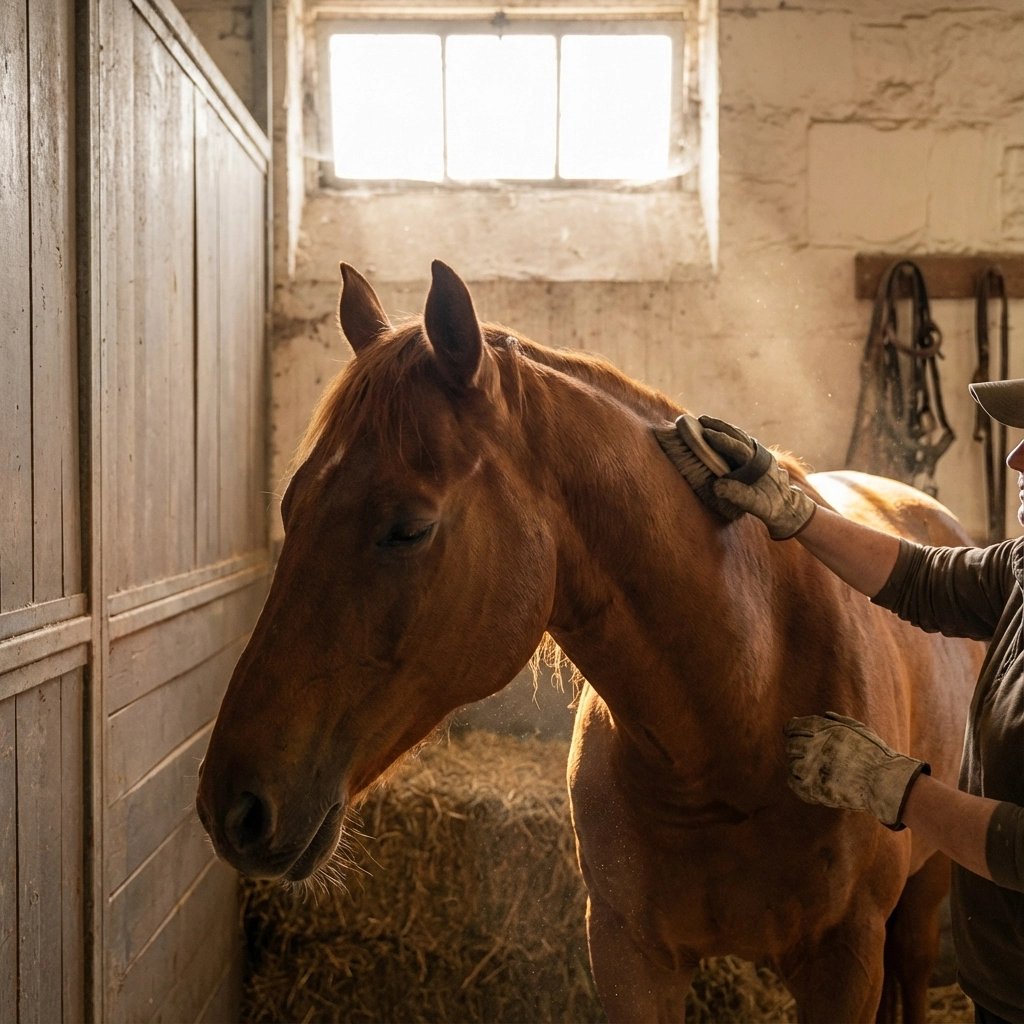
When you approach a horse carrying anxiety, the horse feels it immediately and responds accordingly. If you’re trying to hide frustration behind a smile, the horse knows. This real-time emotional feedback creates a mirror that traditional therapy simply cannot provide.
You learn to recognize your emotional state not through analysis, but through direct experience with a living being who reflects it to you instantly.
The Science Behind the Connections Between Humans and Horses
Evidence-based practices in equine therapy show remarkable results, particularly within intensive inpatient settings where people have time to develop genuine relationships with the animals.
Research demonstrates that after just 9-10 sessions, participants show improvements in motor functions alongside cognitive, emotional, and social-affective development.
But the science goes deeper than statistics. When you work with horses, your nervous system engages in ways that sitting in an office cannot replicate. The three-dimensional movement of riding transmits impulses that mirror human walking patterns, stimulating both physical and neurological healing pathways. Your body learns regulation through movement and connection, not just through conversation.
This is particularly powerful for people dealing with trauma, where traditional talk therapy can sometimes re-traumatize by forcing verbal processing before the nervous system is ready. Horses offer a gentler entry point: a way to practice emotional regulation and trust-building through action rather than analysis.
Why the Therapy Couch Sometimes Comes Up Short
There’s nothing wrong with traditional therapy, but it’s not the right fit for everyone, especially in early recovery. Many people find themselves sitting in sessions feeling pressured to perform, to have insights on command, or to articulate experiences that feel too raw or complex for words.
The clinical setting itself can feel intimidating. Being asked direct questions about feelings when you’ve spent years numbing them can create additional anxiety and resistance. Some people with autism spectrum conditions, severe anxiety, or trauma histories find the face-to-face expectation overwhelming.
Equine therapy removes these barriers entirely. There’s no pressure to talk, no expectation to have immediate insights, and no clinical atmosphere that might trigger fear or resistance. Instead, you’re engaged in natural, hands-on activities: grooming, leading, or simply being present with horses, that develop emotional and practical skills simultaneously.
The Power of Presence Over Performance
In intensive inpatient programs, equine therapy becomes particularly transformative because you have time to build real relationships with the animals. Unlike a weekly therapy appointment, residential programs allow for consistent daily interaction that deepens the therapeutic connection.
Horses require you to be fully present. They don’t respond to who you were yesterday or who you plan to be tomorrow: only to who you are in this moment. This teaches mindfulness and emotional awareness in a way that no meditation app or breathing exercise can match.
When you’re grooming a horse and notice your hands shaking with anxiety, the horse notices too. When you learn to breathe deeply and center yourself, the horse relaxes. This creates a feedback loop that teaches nervous system regulation through direct experience rather than intellectual understanding.
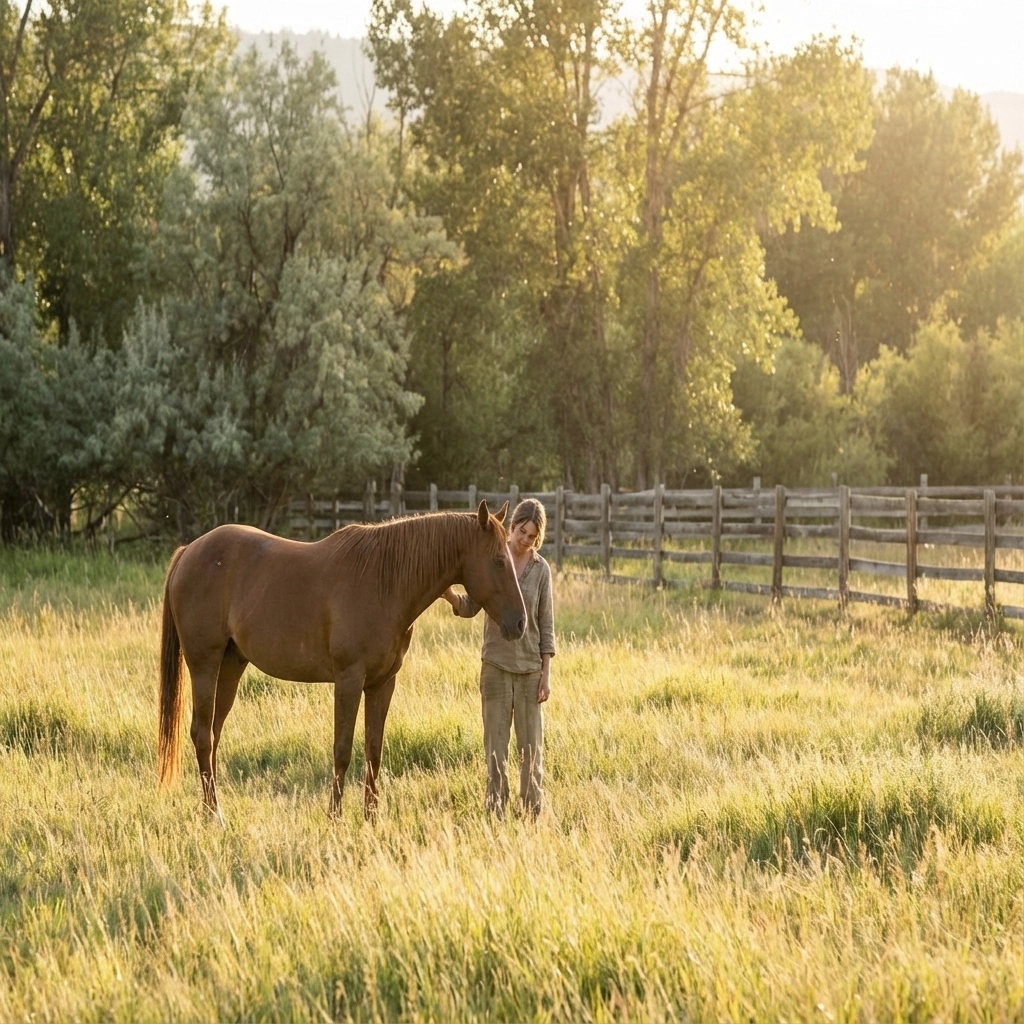
The process is also inherently grounded and grounding. Instead of getting lost in thoughts and analysis, you’re engaged in physical activity that requires focus and attention. Many people find this approach more accessible than traditional therapy, especially those who learn kinesthetically or who struggle with verbal processing.
Building Trust Through Non-Judgmental Connection
Perhaps the most powerful aspect of equine therapy is the complete absence of judgment. Horses don’t care about your past, your mistakes, or your struggles with addiction. They respond only to your present-moment energy and behavior. This creates a safe space where you can practice being authentic without fear of criticism or analysis.
For people in early recovery, this non-judgmental environment is crucial. You can make mistakes, feel frustrated, or experience difficult emotions without worrying about disappointing a therapist or saying the wrong thing. The horse simply responds to what is, creating space for genuine emotional expression and growth.
This builds trust not just with the animal, but with yourself. Many people discover they can be calm, patient, and nurturing with horses, even when they struggle to show these qualities with humans. This becomes a foundation for rebuilding self-worth and confidence.
Integration with Intensive Clinical Care
Within a residential treatment setting, equine therapy works alongside traditional evidence-based practices to create comprehensive healing. While you’re receiving medical detox support, individual counseling, and group therapy, the horses provide a unique form of nervous system regulation and emotional processing that enhances all other treatment modalities.
The insights gained through non-verbal breakthroughs with horses often translate directly into more productive traditional therapy sessions. When you’ve learned to recognize anxiety in your body through a horse’s response, you can communicate that awareness to your therapist more effectively. The emotional regulation skills developed in the stable transfer to every other area of recovery.
Get Information on Healing With Horses at Ingrained Recovery Today
If traditional therapy has left you feeling stuck or frustrated, or if you’re considering intensive treatment but worry about the clinical atmosphere, equine therapy might offer the breakthrough you’ve been searching for. The combination of high-level medical care and innovative therapeutic approaches creates space for healing that goes beyond what either modality could provide alone.
Don’t hesitate to explore whether this approach could work for you. Many people who thought they weren’t “therapy people” have found profound healing through non-verbal connection with horses. The essential element is finding a treatment center that integrates equine therapy thoughtfully within comprehensive clinical care.
At Ingrained Recovery, our 50-acre wooded campus provides the perfect setting for both intensive clinical treatment and meaningful equine therapy experiences. The combination of medical detox, residential care, and innovative therapies like equine-assisted treatment creates multiple pathways to healing.
For more information on our offerings, please reach out for a confidential discussion today.