Visualizing The Roots of Addiction with Tree Models
The Addiction Tree Model provides mental health professionals with a clear look at the underlying roots that have given rise to addictive behaviors and understand the core beliefs that feed them. That’s important because addiction doesn’t happen on a surface level. Its development starts underneath, just as a tree takes root in fertile soil.
By mapping the roots, core beliefs, and the fruits of addiction (consequences), the therapists at Ingrained Recovery in Eastman, Georgia, can identify areas for healing and change for our clients. It’s a trauma-informed tool that can help people open up about past experiences, even those they’ve carried since they were children.
If you have questions about using the Addiction Tree to learn more about the emotional underpinnings of addiction, we encourage you to continue reading.
Up To 100% of Rehab Covered By Insurance
Find Help At Ingrained Recovery
What is the Addiction Tree Model for Substance Use?
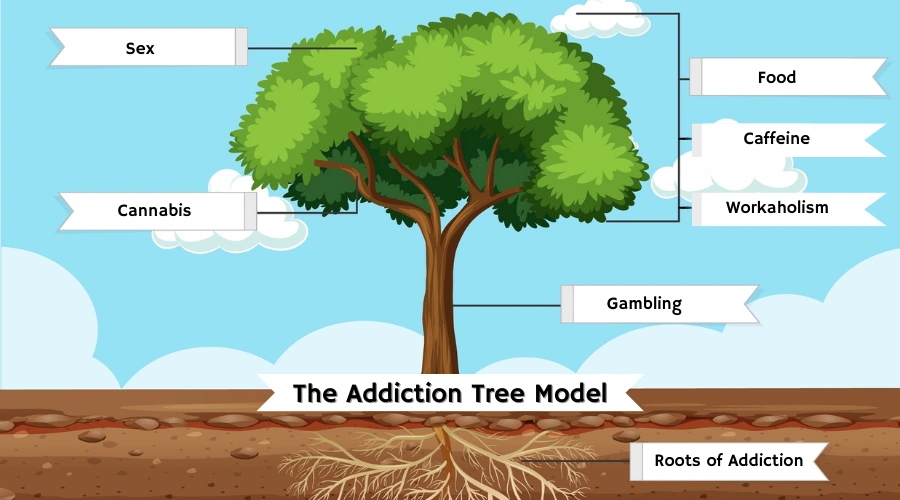
The Addiction Tree Model for substance use provides a way for you to visually organize the factors that contribute to addiction.
You look at what’s hidden below the surface (the roots below the soil) and start connecting it through the trunk and into the fruits or outcomes of the behaviours of addiction.
When you see your experiences laid out visually, you begin to truly understand those connections and gain clarity about what needs to heal to become a happy, healthy version of yourself.
How the Addiction Tree Can Lead to Improved Well-Being
Working on your addiction tree can improve well-being by helping you shift from shame about the past to understanding and self-respect. Many who face recovery describe themselves as “broken” without having a clear definition to explain that term.
An addiction tree helps label the things that have contributed to a breakdown in mental health – genetics, loss of a relationship, grief after loss, or other factors. Each person’s tree will look different than anyone else’s, with each revealing a great deal about the essential recovery work to do.
Our Addiction Tree Free PDF Worksheet
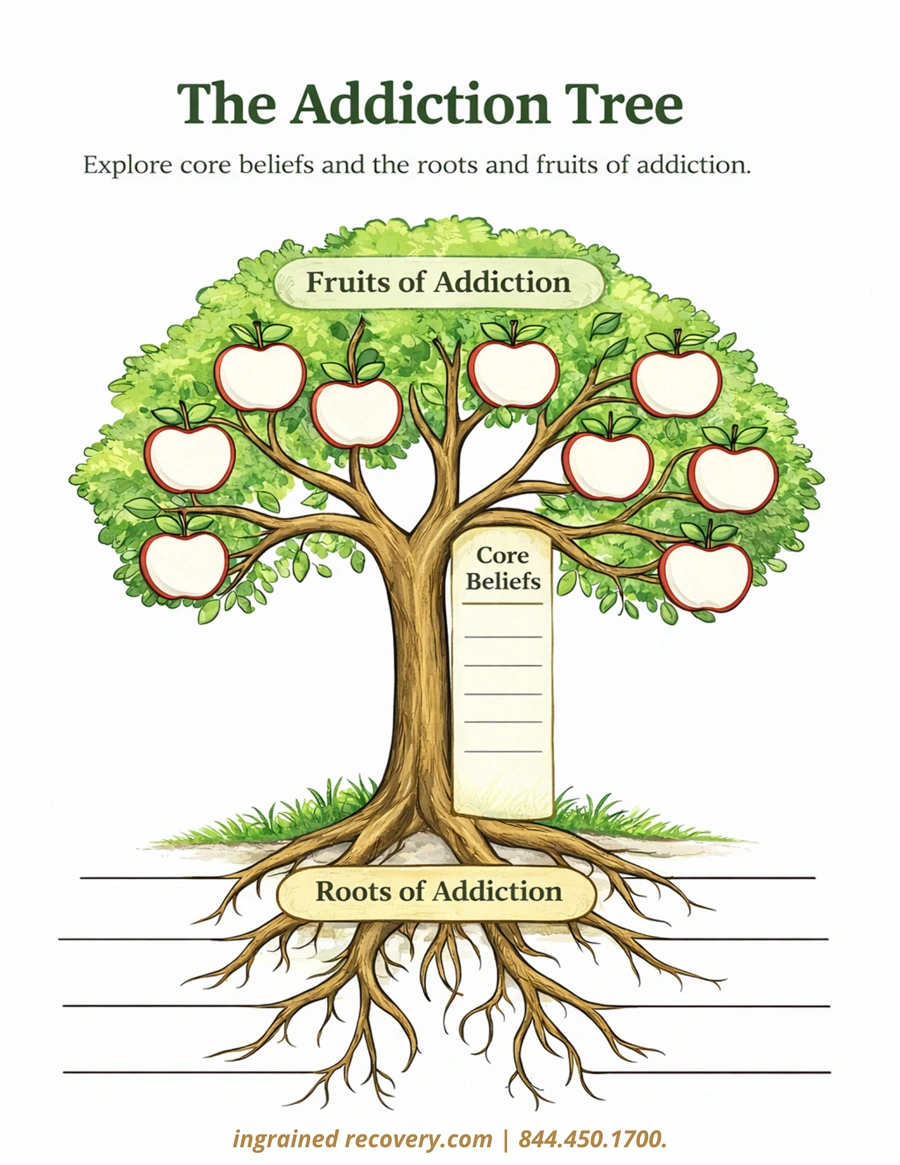
Our worksheet can help you identify your addiction triggers. Feel free to download, print the page, and complete it. Share it with your therapist; it will give them a better understanding of your relationship with trauma and addiction.
The addiction tree is a helpful activity because it lets you name the things that have trapped you in addiction. Because your mental health challenges, including addiction, are specific to you, your counselor will create a treatment program and coping strategies specifically addressing your triggers or pain points.
The Roots of the Addiction Tree: Low Self-Esteem, Shame & Trauma
The roots of addiction take hold long before substance use begins. Experiences from childhood, including family instability, neglect, or trauma exposure, can cause deep emotional wounds. Many adults struggling with addiction report feelings of loneliness, rejection, or not being seen. Unresolved trauma can lead to negative patterns of behavior that hinder recovery.
Common traumatic experiences that serve as “soil” where roots can grow are:
- Sexual abuse
- Physical assaults or abuse
- Bullying
- Living in a community with constant threats of violence
- Grief after a significant loss
- Chronic depression
- Unresolved anger
Addiction can also come from a desire to escape shame, pain, and self-loathing. These may come from trauma or other negative experiences.
Studies have found that up to 95% of adults in treatment for substance use have also experienced trauma. The connection is undeniable.
When you write these down on the addiction tree, you begin to understand the emotional causes of addiction. You empower yourself to start talking with your therapist about these difficult topics.
Include Legally and Culturally Acceptable Drugs if Problematic
Illicit drugs are not the only types of addiction. Other common forms of addiction may include:
- Food
- Caffeine
- Cannabis
- Sex
- Vaping or nicotine
- Energy drinks
- Workaholism
- Gambling
These things are acceptable in most cultures and easy to conceal. But they still reveal an underlying pattern of maladaptive behaviors that you must process to truly enjoy a balanced life full of happiness.
The Tree Trunk: Core Beliefs that Reinforce and Support Addiction to Drugs or Alcohol

The trunk of the addiction tree represents you core beliefs – the structure that holds together the addiction. These beliefs support your addiction. Some beliefs consist of self-hating language, such as:
- I am not enough.
- I always fail.
- Nobody respects me.
- I have no skills or abilities.
- I’m a loser.
These internal messages shape how you feel and how you interact with friends and family.
The Branches: The Fruits of Substance Abuse and Mental Health Conditions
The branches bear the fruits of addiction, the consequences that ripen over time. The branches of the tree help you see how the traumas from childhood are present in your life today. You may experience:
- Strained relationships
- Financial strain
- Job loss
- Legal problems
- Declining physical health
- Loss of reasonable safety
Shaking those branches to examine the fruit can cause fear or pain, but doing so will provide you with insights, motivating you to stop using drugs or alcohol and build a brighter future.
Using the Addiction Tree Within a Comprehensive Recovery Plan

Completing an addiction tree is part of a comprehensive recovery plan that includes a variety of treatment modalities:
- Individual/group/family therapy
- Medication management
- Medically supervised detoxification
- Behavioral therapies
- Aftercare planning
- Life skills exercises
At Ingrained, your treatment plan will be coordinated by our team to address your specific recovery needs.
Up To 100% of Rehab Covered By Insurance
Find Help At Ingrained Recovery
Call Ingrained Recovery for Effective Substance Use Disorder Treatment Plans
Your Addiction Tree is an engaging way to gain insight into your unique story. It also helps our team develop the most appropriate therapies and resources to help you level up and step into a new, more fulfilling life.
If you’re ready to escape your substance use, we are here to help. Call our admissions team today.
References Cited:
- Purkey, E., Patel, R., & Phillips, S. P. (2023). Effectiveness of trauma-informed care implementation in health care settings: Systematic review of reviews and realist synthesis. BMC Health Services Research, 23, Article 164.