Our In-Depth Alcoholics Anonymous 4th Step Worksheet
Making a list on a Step 4 AA Worksheet can be helpful for anyone unsure of how to approach the Alcoholics Anonymous (AA) 4th step. Taking a searching and fearless moral inventory requires both self-discovery and self-awareness, which can feel strange after years of struggling with addiction.
Ingrained Recovery, an evidence-based, licensed treatment center in Eastman, Georgia, recommends that clients attend 12-Step meetings as part of their recovery process. Our clients attend peer groups during their time at our recovery center. We encourage program graduates to continue that momentum after finishing their programs by finding community support groups like AA.
We encourage you to keep reading and download our Step 4 AA worksheet as you continue working on your twelve steps.
Get Accredited Treatment Programs at Ingrained Recovery

Before We Begin: AA 4th Step Words Can Be Triggering for Some
Let’s address something before we start – the AA Program language, which can sound triggering by today’s standards. The founders of Alcoholics Anonymous, Bill Wilson and Bob Smith, started the meetings in 1935. They were among the first pioneers who recognized alcoholism as a disease, not just a series of poor decisions, an unpopular opinion at that time.
They knew that finding personal growth to achieve sobriety meant taking a long look in the mirror, admitting wrongs, and making positive changes, including turning their lives over to God or a Higher Power. The language of their day includes words that we sometimes consider offensive today: alcoholic, character defects, insane/insanity, moral inventory, to name a few.
These words reflect the program’s original era and have not been updated. Some language lands differently today, but the intent was honesty, not stigma.
Get Proven Detox and Rehab Options at Ingrained
Using Our AA Fourth Step Inventory Worksheet
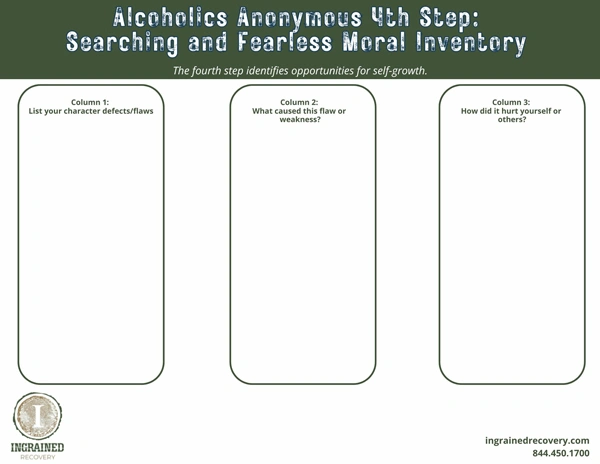
We have developed this 3-column Fourth Step Inventory PDF for you. While you may find some online variations using four columns, that 4th column can feel guilt-focused, so most modern clinicians now prefer the 3-column approach.
The worksheet we provide keeps the structure easy, with large columns and plenty of space to write as you identify the patterns or character defects that have shown up in your life.
As you work, take the time you need to slow down and reflect without becoming overwhelmed. Don’t rush the process. Pause, consider the context in which any character defects have impacted you or others, and notice patterns of negative emotions, anger, or harmful behaviors.
Completing the First Column: A List of Character Flaws as Part of Step 4
The first column asks you to list your character flaws or defects. Alcoholics Anonymous calls this “taking a searching and fearless moral inventory.”
This exercise isn’t about labeling yourself as a bad person. Instead, you will identify recurring patterns that have harmed you or kept you stuck in addiction.
Some frequent examples AA members list include the following:
- Dishonesty
- Resentment
- Selfishness
- Avoidance
- Anger
- People-pleasing
- Manipulation
- Pride
Focus on the wider patterns, not just isolated incidents or one-offs. For instance, if you usually react defensively and overreact when someone provides feedback about the benefits of getting sober, it belongs on the list.
Filling in the Second Column: Causes of the Character Defects

The second column of the AA fourth step inventory worksheet starts helping you dig deeper into the root causes of your addiction. You begin to ask yourself: What caused this flaw or weakness?
The behaviors you list as defects today started as coping tools. For instance, if your parents were verbally abusive during your childhood, you might have started lying to avoid punishment. Today, you might also feel anger that you can’t explain or use alcohol to avoid having conversations that feel unsafe.
The point of writing down the reasons isn’t to excuse negative feelings or behaviors but to understand them. The information you explore in this step is a crucial step toward emotional healing and sobriety.
Understanding Column 3: How Your Addictive Behaviors Hurt Loved Ones
Column three is where accountability starts. In a future part of AA, you’ll take an important step and fix things with others. But for now, you need to understand how past behaviors and actions during active addiction caused harm to yourself and hurt your relationships.
Addiction doesn’t hurt only one person. The fallout of addiction that can impact others can include:
Broken trust
Financial problems
Emotional withdrawal
Dishonesty
Housing instability
Legal issues
In the 3rd column, you start piecing together how these patterns have led to harm. This step is undoubtedly uncomfortable. But that discomfort is a sign of growth. You’re a good person impacted by a chronic disease; however, you’re taking the first steps to getting back on track to a better life by completing this important AA step work.
Why You Must Take a Fearless Moral Inventory in the AA 4th Step
Let’s look at the context of the fourth step inventory.
The fourth step moral inventory process closes the loop on Step 3, which challenges you to turn your will and life over to God. The exact program language reads that we “made a decision to turn our will and our lives over to the care of God as we understood Him.”
The 4th step becomes important in Step 5, which asks you to admit to God, yourself, and another person the exact nature of your wrongs. Step 5 of the AA program states we “admitted to God, to ourselves, and to another human being the exact nature of our wrongs.”
According to the AA Big Book, the foundational program document, taking an honest inventory in step 4 closes the loop on Step 3, listing the character flaws that you’re turning over to God. It also sets you up to fully participate in step 5, which is critical for letting go of past mistakes as you start making positive changes and start self-healing.
Balancing Fourth Step Worksheets with Finding Your Positive Qualities
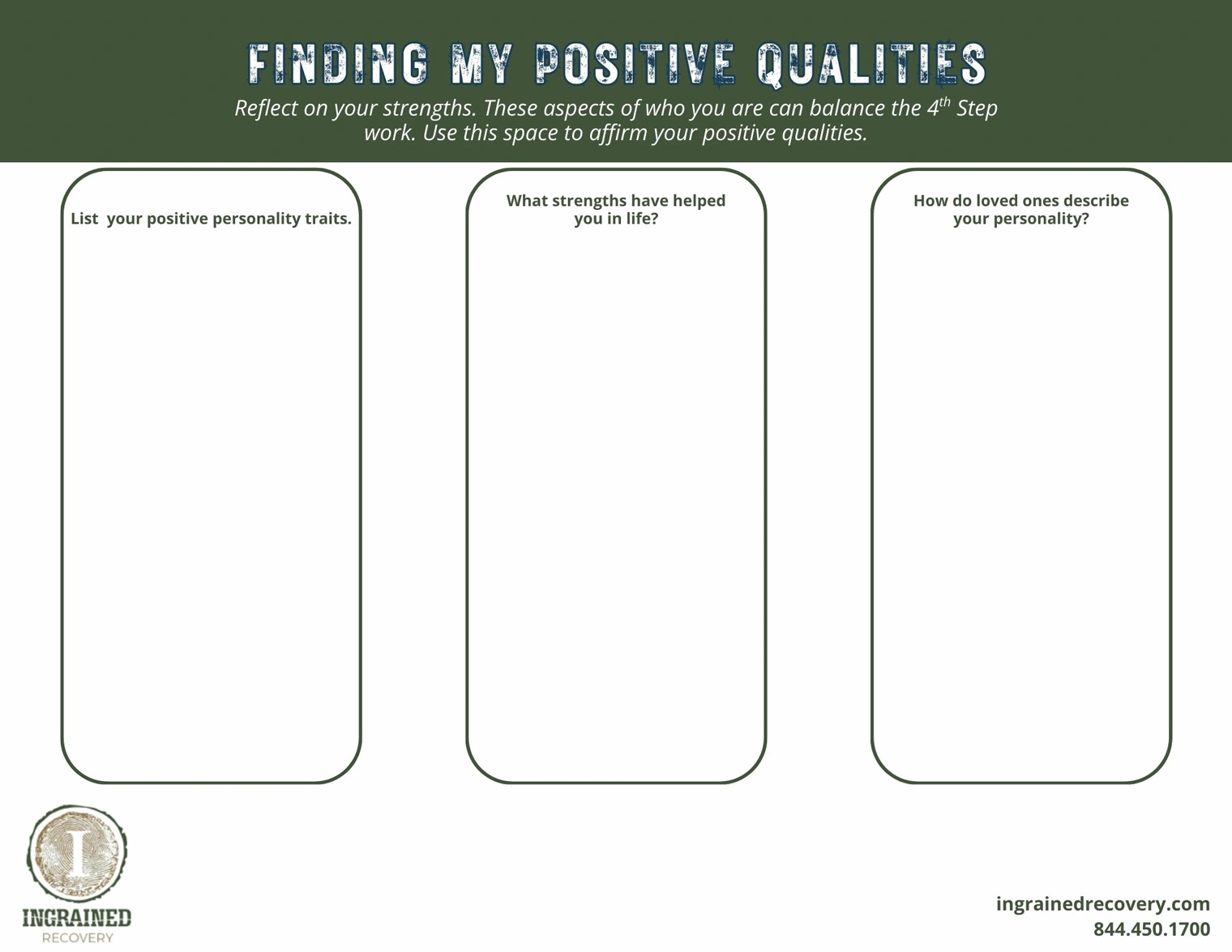
Fourth step inventory work can feel heavy. While the insights gained are valuable, you might feel some awkward emotions afterward. We are including a second worksheet to help you finish on a positive note. It’s important to note that this worksheet is NOT AA Step work. It is completely optional and can help you boost your self-love again before moving on to the next steps.
If you decide to complete this supplemental PDF, remember that your step 4 character flaws and past behaviors don’t define you; they’re the byproduct of addiction.
First Column: List Your Best Personality Traits
In the first column of this extra worksheet, write down any traits that reflect your innermost self. These can be:
- Creativity
- Loyalty
- Kindness
- Perseverance
- Empathy
- Courage
- Humor
If these don’t sound like your life today, imagine yourself before addiction. Think of the times when you helped someone solve a problem or did something nice for a stranger. Those positive attributes are still inside of you, and recovery is the key that will unlock the door and set them free again.
Second Column: Identify Your Personal Strengths
The second section builds on the skills that have helped you survive, even during the most difficult parts of life. Consider the following examples:
- Strong work ethic
- Artistic talent
- Leadership
- Problem-solving
- Resilience
- Communication skills
- Fast learner
When you acknowledge your skills, you’ll soon regain self-confidence. You’re reinforcing the positive attitude that will lead to an eventual spiritual awakening, a point that will mark a significant milestone in your AA program.
Third Column: Describe How Others See You
It can be hard to see ourselves clearly. Instead, think about how your closest friends or loved ones might describe your personality. What positive words might they use? Here are a few possible examples:
- Loving
- Helpful to others
- Always there for friends
- Accepts responsibility
- Easy to talk with
- Non-judgmental
Think back to the compliments about your character that you’ve received in the past – maybe before you entered active addiction. Those are your entries in this column. Like your personality traits, these positive actions still exist; they’re just stuck.
Tips for Competing AA Step Work, Even When It's Difficult

Finally, we will provide guidance and tips for completing your 4th step work, which takes courage and focus.
Find a Quiet Place for Self-Reflection
Find a calm, distraction-free place to write. Step work demands focused attention. Turn off your phone to allow yourself the time necessary for reflection and honesty.
Have All the Necessary Materials Ready
Gather everything you need. Print out your PDF worksheets, grab a pen or pencil, and keep a notepad nearby in case any questions arise from the step 4 work. Being prepared allows you to engage without getting sidetracked.
Take an Honest Look and Name the Past Actions Without Fear
Remember that Step 4 asks not for a list; it requires a fearless moral inventory. Fear keeps you stock in addiction. The fourth step inventory invites you to move through that fear. Be truthful with yourself, avoiding the temptation to minimize or exaggerate. State your flaws accurately. Honesty builds integrity and helps you through the rest of the AA process.
Engage in Self-Care After You Write About the Character Defects
Inventory worksheet can stir up strong feelings. Plan a grounding activity for after this work. Some self-care activities to try include:
- Take a walk
- Soak up some sunshine
- Call a supportive loved one
- Go to an AA meeting
- Pray or meditate
You will regain emotional regulation and set yourself up for a continued healthy recovery.
What if AA Alone Is Not Enough?

A recent article in Psychology Today (see references below) addresses a frequent concern: sometimes, AA alone is not enough for healing. Sure, AA meetings provide peer support and spiritual growth. However, some people need additional clinical-quality care.
That becomes especially true for those with trauma, co-occurring mental health disorders, or polysubstance or long-term use. In these instances, you will reap the best outcomes by combining professional care with peer group attendance.
Evidence-based treatment, including medically-supervised detox, psychological therapy, medication management, behavioral counseling, and medication-assisted treatment, provides additional interventions.
Structured programming addresses underlying issues that AA doesn’t address adequately. No amount of attending meetings can help process a severe childhood trauma.
Up To 100% of Rehab Costs Covered By Insurance
Call Ingrained Today to Start a Personal Journey of Recovery
If you struggle with alcohol or other substance use disorders, you don’t have to face recovery alone. Ingrained Recovery provides licensed, evidence-based treatment programs in a supportive and safe environment.
Our campus is set on 50 acres, where you will find plenty of space to work on your recovery goals and learn new, healthy coping tools that will support lasting recovery.
Call our team for help for a confidential talk about your recovery needs today.
References Cited:
- Alcoholics Anonymous World Services, Inc. (n.d.). A brief history of Alcoholics Anonymous. Origins: Alcohol & Addiction History.
- Alcoholics Anonymous. (2001). Alcoholics Anonymous: The story of how many thousands of men and women have recovered from alcoholism (4th ed.). Alcoholics Anonymous World Services.
- Paige, L. J. (2025, June 19). What if Alcoholics Anonymous doesn’t work for you? Psychology Today. Paige, L. J. (2025, June 19). What if Alcoholics Anonymous doesn’t work for you? The Psyche Pulse, Psychology Today.