You've probably spent countless hours talking about your struggles in therapy rooms, trying to untangle the complicated web of thoughts, feelings, and behaviors that brought you here. And while traditional talk therapy has its place, there's something profound about stepping outside those four walls and engaging with recovery in a completely different way.
That's where experiential equine therapy comes in: a transformative approach that moves beyond words into lived experience, offering a path to healing that many people find more immediate and lasting than conventional methods alone.
What Is Experiential Equine Therapy?
Experiential equine therapy isn't about learning to ride horses or completing equestrian activities. Instead, it's a form of evidence-based care that uses interactions with horses to facilitate emotional growth, self-awareness, and behavioral change. Think of it as therapy that happens through experience rather than just conversation.
In this therapeutic setting, horses become your co-therapists. They're incredibly sensitive to human emotions and respond immediately to your energy, body language, and emotional state. When you approach a horse while feeling anxious or disconnected, the horse will often mirror that energy back to you: withdrawing, becoming restless, or showing signs of stress. Conversely, when you're calm and present, horses typically respond with connection and trust.

This real-time feedback creates a powerful learning environment where you can't hide behind words or explanations. The horse's response shows you exactly what you're projecting into the world, often revealing patterns and behaviors you weren't even aware of.
Why "Doing" Beats Just "Talking" in Recovery
Traditional therapy has an important role in recovery, but it primarily engages the thinking brain: the part that analyzes, explains, and rationalizes. The challenge is that addiction and trauma often live deeper than conscious thought, in the nervous system and body where words can't always reach.
Experiential equine therapy engages multiple dimensions of healing simultaneously:
- Physical awareness: You become attuned to your body's responses and learn to regulate your nervous system
- Emotional processing: Feelings surface naturally through interaction rather than forced introspection
- Behavioral practice: You try new ways of being in real-time with immediate feedback
- Relational skills: You practice trust, communication, and boundary-setting with a non-judgmental partner
When you're working with a horse, there's no room for the mental gymnastics that can sometimes happen in traditional therapy. Horses don't respond to what you say: they respond to who you're being in that moment.
If you're ready to experience this transformative approach as part of comprehensive residential treatment, consider reaching out to learn more about our equine program. Our team can help you understand whether this level of care makes sense for your situation.
The Science Behind Equine-Assisted Recovery
The effectiveness of experiential equine therapy isn't just anecdotal: it's backed by solid research. Studies show that clients working with horses experience:
- 18-23% global improvements in psychological, social, and emotional wellness
- 12-28% increases in resilience, self-efficacy, and hope
- Measurable decreases in blood pressure and stress hormones
- Significant reductions in anxiety, tension, and anger
These aren't just temporary feel-good effects. The neurological changes that happen during equine interactions create lasting pathways for emotional regulation and interpersonal connection.

Perhaps most importantly for people in early recovery, horses provide what researchers call a "buffer effect": their calming presence eases therapeutic tensions and allows faster connection between you and your treatment team. This is especially valuable if you've struggled with trust or have a history of trauma that makes human relationships challenging.
How Equine Therapy Transforms Residential Treatment
In a residential setting, experiential equine therapy becomes even more powerful because you have the time and space to fully engage with the process. Unlike outpatient programs where you might only have an hour a week for this work, residential treatment allows for deeper, more consistent engagement.
Here's what makes the residential experience unique:
Daily Interaction Opportunities: Rather than rushing to apply insights from a brief session, you have ongoing opportunities to practice new skills and deepen your connection with the horses.
Integration with Other Therapies: Your work with horses complements and enhances traditional counseling, group therapy, and other evidence-based treatments you're receiving.
Safe Environment for Vulnerability: On our secluded campus, you don't have to worry about external pressures or judgments while you explore new ways of being.
Immediate Application: The confidence, accountability, and emotional regulation skills you develop with horses can be immediately applied to your relationships with peers and staff.
Building Essential Recovery Skills Through Equine Work
Every interaction with horses teaches something valuable for long-term recovery:
Rebuilding Trust and Connection
Many people entering treatment struggle with relationships: either avoiding them entirely or cycling through unhealthy patterns. Horses offer a unique opportunity to practice healthy connection with a being that has no agenda beyond authentic interaction.
Successfully developing a working relationship with a horse requires clear communication, respect for boundaries, and genuine presence: all skills that transfer directly to human relationships.
Developing Emotional Awareness and Regulation
Horses are like living biofeedback machines. They immediately reflect your internal state, helping you recognize emotions you might be suppressing or avoiding. Over time, you learn to notice the subtle shifts in your nervous system and practice regulating your responses.
Practicing Accountability and Responsibility
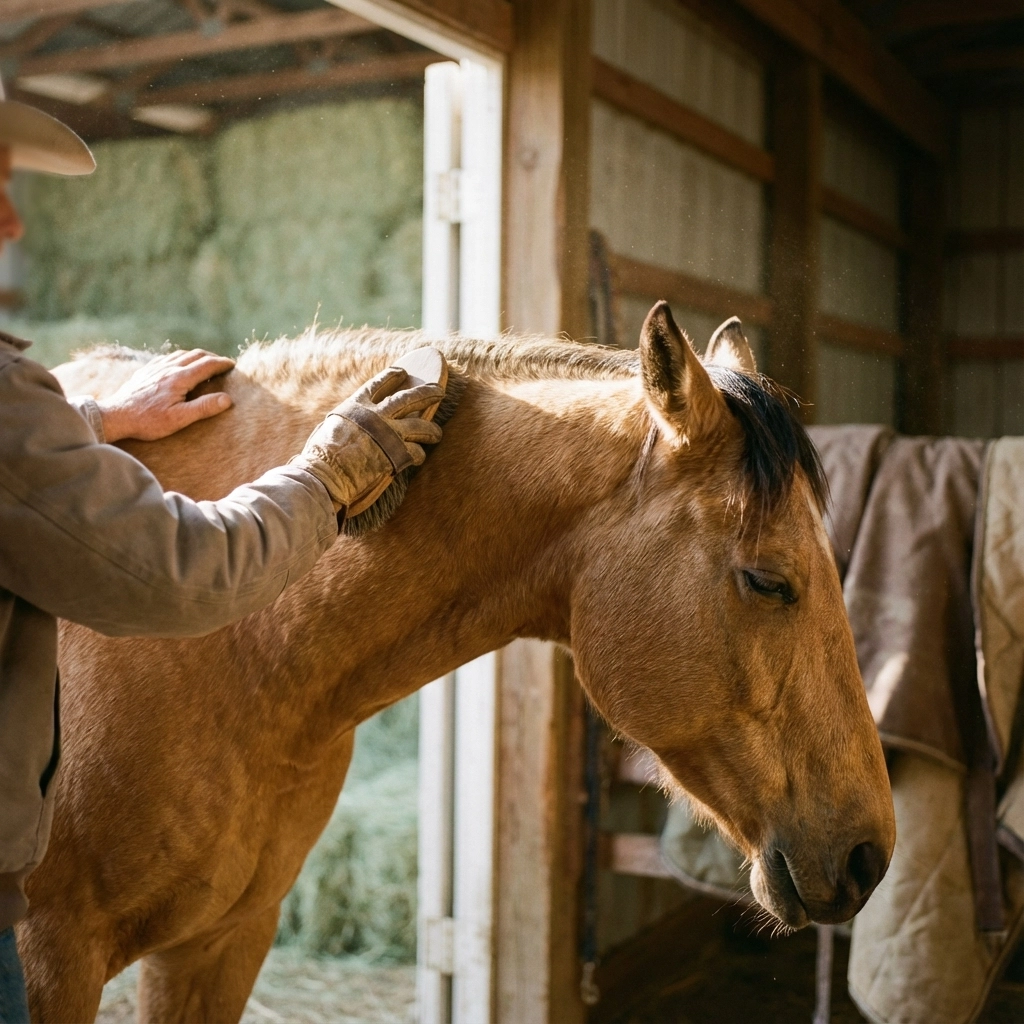
Caring for horses demands real accountability. Unlike abstract recovery goals, the horse's wellbeing depends on your follow-through. This concrete responsibility helps rebuild the discipline and reliability that addiction often erodes.
Building Confidence Through Mastery
Successfully leading a horse, completing ground exercises, or maintaining calm presence around such powerful animals provides tangible evidence of your capability. This sense of mastery directly counters the shame and self-doubt that often accompany addiction.
Are you ready to discover what becomes possible when you step outside traditional therapy approaches? Our experienced team can help you understand how equine therapy fits into a comprehensive residential treatment plan. Reach out today to learn more.
Why This Matters for Long-Term Recovery
The beauty of experiential equine therapy lies in how it addresses recovery from multiple angles simultaneously. While you're learning to trust and communicate with horses, you're also:
- Processing trauma stored in your body
- Developing emotional regulation skills
- Practicing healthy relationships
- Building confidence and self-efficacy
- Learning to be present and mindful
These aren't separate goals: they're interconnected aspects of healing that horses help you address holistically.
The skills you develop through equine work don't stay in the arena. The emotional awareness, interpersonal skills, and nervous system regulation you practice with horses become resources you can access long after treatment ends.
Taking the Next Step
Recovery works best when you have multiple pathways to healing. Experiential equine therapy offers a unique entry point for people who feel stuck in traditional talk therapy or who learn better through hands-on experience.
At Ingrained Recovery, our equine program is integrated into comprehensive residential treatment that includes medical detox, individual therapy, group counseling, and other evidence-based care approaches. You don't have to choose between different types of therapy: you get the benefit of all approaches working together.
If you're exhausted from trying to think your way out of addiction and ready to experience recovery differently, we're here to help. Our admissions team understands what you're facing and can help you determine whether our level of care: including equine therapy: makes sense for your situation.
Take the first step toward a different kind of healing. You deserve care that meets you where you are and helps you discover strengths you might not even know you have.
