
You've been here before. Maybe multiple times. The decision to quit drinking or using feels clear in your mind, but your body has other plans. The shaking starts within hours. Sleep becomes impossible. Your heart races like you've been running, even while lying still. And somewhere in the back of your mind, you're wondering if this time will be different, or if you're putting yourself in real danger.
The truth is, there's a world of difference between detox and withdrawal, and understanding that difference could literally save your life.
What's Really Happening When You Try to Quit Alone
When you decide to stop using alcohol or opioids on your own, you're essentially asking your body to function without something it has chemically adapted to need. This isn't a matter of willpower or moral strength, it's basic physiology. Your brain has rewired itself around the presence of these substances, and when you suddenly remove them, every system in your body has to recalibrate.
This process, known as withdrawal, happens whether you're in a medical facility or sitting alone in your bedroom. The symptoms are the same: nausea, sweating, tremors, anxiety, and often much worse. But here's what many people don't realize: withdrawal without medical supervision can escalate from uncomfortable to life-threatening within hours.

The term "white-knuckling" comes from the way people grip something tightly when they're fighting through intense discomfort. It represents the idea that you can power through withdrawal symptoms through sheer determination. Unfortunately, your body doesn't care how determined you are when it goes into medical crisis.
The Critical Difference Between Detox and Withdrawal
Most people use these terms interchangeably, but they describe completely different experiences:
Withdrawal is what happens to your body when you stop using substances. It's the collection of physical and psychological symptoms that occur as your system tries to function without alcohol or drugs. Withdrawal happens regardless of where you are or whether anyone is helping you.
Detox is the medically supervised process designed to safely manage withdrawal symptoms. It includes 24/7 monitoring, medication management, nutritional support, and immediate intervention if dangerous complications arise.
Think of it this way: withdrawal is the storm your body goes through. Detox is the shelter that keeps you safe while the storm passes.
At Ingrained Recovery, we see people every day who tried to manage withdrawal on their own, only to realize they needed professional support when symptoms became overwhelming. The difference in outcomes between supervised detox and attempting withdrawal alone isn't just significant, it can be the difference between successful recovery and medical emergency.
Why Your Body Rebels During Withdrawal
Your brain operates on a delicate chemical balance. When you use alcohol or opioids regularly, your brain adjusts by changing how it produces and processes natural chemicals like dopamine, serotonin, and GABA. These adaptations happen gradually over time, which is why tolerance develops, you need more of the substance to achieve the same effect.
When you suddenly stop using, your brain doesn't immediately readjust. Instead, it continues operating as if the substance is still present, creating a dangerous chemical imbalance. For alcohol, this can mean:
- Seizures that can occur without warning, especially in people who have been drinking heavily for extended periods
- Delirium tremens (DTs), characterized by confusion, hallucinations, and potentially fatal cardiovascular complications
- Severe dehydration and electrolyte imbalances that affect heart function and blood pressure
For opioids, while withdrawal is typically not life-threatening, the psychological distress can be so intense that it leads to:
- Severe depression and suicidal thoughts
- Extreme anxiety and panic attacks
- Intense cravings that make relapse almost inevitable without support
The Hidden Dangers of Going It Alone
The biggest risk of attempting withdrawal at home isn't just the immediate medical complications, though those are serious enough. The hidden danger is that most people who try to quit on their own don't make it through the acute withdrawal phase, setting themselves up for a cycle of repeated failed attempts.
Each failed attempt does more than damage your confidence. It actually makes subsequent withdrawal episodes more severe through a process called "kindling." Your brain becomes more sensitive to withdrawal each time you go through it, meaning the symptoms get worse and the medical risks increase.
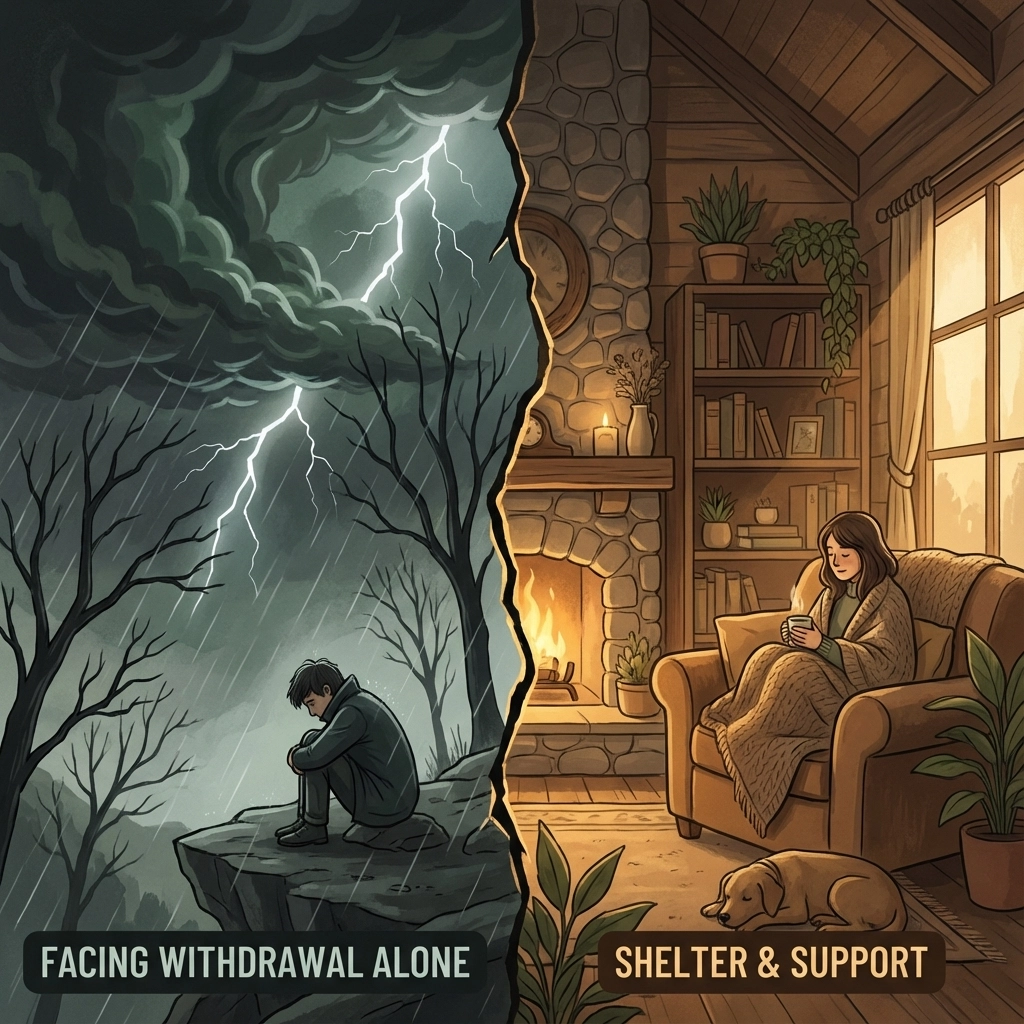
Beyond the physical risks, attempting withdrawal alone means facing the psychological components without professional support. The isolation, fear, and emotional volatility that accompany withdrawal can be overwhelming when you're managing them without trained clinical staff who understand exactly what you're experiencing.
Many people also underestimate the importance of proper nutrition and hydration during withdrawal. Your body is working overtime to eliminate toxins and rebalance itself, but without medical guidance, it's nearly impossible to maintain the nutritional support your system needs during this critical period.
If you're considering attempting detox on your own, or if you've tried before without success, please call us at (844) 450-1700. Our admissions team can help you understand your options and determine whether medical detox is appropriate for your situation.
How Medical Detox Changes Everything
Professional detox isn't just about having medical staff nearby in case something goes wrong: though that's certainly crucial. It's about creating an environment where your body can safely navigate withdrawal while receiving comprehensive support that dramatically improves your chances of completing the process successfully.
24/7 Medical Monitoring: Clinical staff continuously monitor your vital signs, watching for early warning signs of complications before they become dangerous. Blood pressure, heart rate, temperature, and neurological function are tracked around the clock.
Medication Management: FDA-approved medications can significantly reduce withdrawal symptoms and prevent dangerous complications. For alcohol withdrawal, medications like benzodiazepines can prevent seizures. For opioid withdrawal, medications like buprenorphine can ease symptoms while blocking cravings.
Nutritional Support: Your body needs specific nutrients to support the detox process. Medical detox includes carefully planned nutrition and hydration to help your system recover more efficiently.
Psychological Support: Withdrawal affects your mental state as much as your physical condition. Professional detox includes counseling and emotional support to help you navigate the psychological challenges of early recovery.
At Ingrained Recovery, our medical detox program combines the safety of hospital-level care with the comfort of a treatment environment designed specifically for recovery. You're not in a sterile medical ward: you're in a place where every aspect of the environment supports your healing process.
When Every Hour Matters
The decision about whether to attempt withdrawal alone or seek professional help isn't just about comfort: it's about safety and effectiveness. While some people do successfully complete withdrawal without medical supervision, the risks often outweigh any perceived benefits of trying to handle it alone.
Consider professional medical detox if you experience:
- Heavy daily alcohol use, especially if you've noticed increased tolerance or previous withdrawal symptoms
- Regular opioid use, particularly if you've been using for more than a few weeks or if you've tried to quit before without success
- Any history of seizures, heart problems, or other medical conditions that could be complicated by withdrawal
- Previous failed attempts at quitting on your own
- Concerns about your safety or ability to get through withdrawal without relapsing
The reality is that withdrawal is a medical process that benefits from medical supervision, just like any other significant physical challenge your body might face. You wouldn't attempt to treat a broken bone or heart condition without professional help: withdrawal deserves the same level of medical attention.

Professional detox also provides something that's impossible to achieve at home: complete separation from the triggers, stressors, and environments that contributed to your substance use in the first place. This separation isn't just helpful: for many people, it's essential for getting through those crucial first days when the urge to use again is strongest.
Recovery works best when people are removed from daily triggers and given the time and space they need to stabilize physically and emotionally. That's why residential care following detox is often recommended: it extends that protective environment while you build the skills and support systems necessary for long-term recovery.
Medical detox is the foundation, but it's just the beginning. The goal isn't just to get through withdrawal safely: it's to establish stability that leads to lasting change. When detox is followed by comprehensive treatment, people have the best chance of breaking free from the cycle of addiction permanently.
If you're ready to explore a safer path forward, or if you have questions about whether medical detox is right for your situation, call Ingrained Recovery at (844) 450-1700. Our clinical team can provide a confidential assessment and help you understand your options. You don't have to face this alone, and you don't have to risk your safety trying to power through withdrawal without support.
The difference between struggling through withdrawal alone and having professional support isn't just about comfort; it's about giving yourself the best possible chance of succeeding. Your recovery is worth that investment, and so are you.
