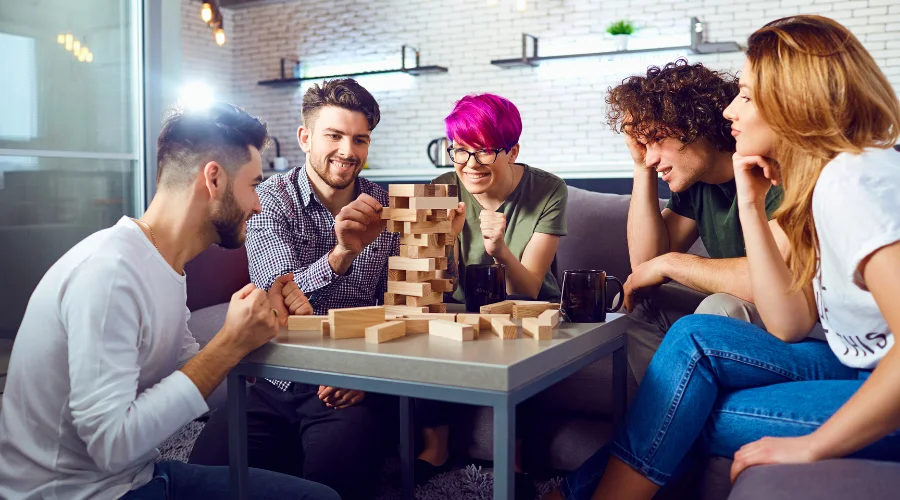
Fun recovery games for groups can make it easier for adults to practice coping skills, build peer connection, and talk about relapse prevention. The strongest activities do more than fill time. They give participants a clear skill to rehearse and a chance to connect that skill to daily recovery.
At Ingrained Recovery, group counseling is part of a structured residential treatment program. Interactive exercises may be used when they fit the group’s clinical goals, stage of trust, and safety needs. The activity creates the experience, but the facilitator’s debrief turns it into useful recovery work.
Essential Takeaways
- Recovery games work best when every activity has a clear purpose, such as identifying triggers, practicing refusal skills, managing stress, or building trust.
- Participation should be voluntary. Adults need a pass option and should never be pressured to disclose trauma, legal history, or other private information.
- Friendly competition can increase energy, but games should not reward the “best” recovery story or shame someone for having fewer skills or less sober time.
- A short debrief is essential. Participants should connect what happened in the game to a real recovery situation.
- Many group activities can be adapted for individual therapy, journaling, or solo recovery practice between sessions.
- Games support treatment; they do not replace assessment, counseling, medication when indicated, or a complete relapse-prevention plan.
Get Accredited Treatment at Ingrained
Find Help At Ingrained Recovery
Why Group Therapy Games Can Support Addiction Recovery
Group therapy gives people a place to learn from peers, practice communication, and recognize that they are not alone. It can also feel uncomfortable. New members may be guarded, ashamed, anxious, or unsure how much to share.
A well-chosen activity can lower the pressure without making the group superficial. Instead of asking someone to deliver a long personal story, the facilitator can invite the person to answer one prompt, act out one coping skill, or work with a partner on a concrete problem.
Group therapy games can support addiction recovery by helping participants:
- Practice skills instead of only hearing about them
- Receive peer feedback in a structured setting
- Build confidence through small successes
- Notice automatic reactions during stress or competition
- Improve listening, cooperation, and problem solving
- Learn recovery language through active recall
- Experience sober enjoyment and connection
Research on group treatment emphasizes that facilitators need flexibility because substance use groups often include people with different treatment histories, learning styles, and levels of readiness. Serious-game research also suggests that interactive formats can improve engagement and skill rehearsal, although the evidence varies by game and population.
The practical lesson is simple: use play with purpose. The game should serve the treatment goal, not take it over.
How to Run Recovery Games Safely
Before choosing an activity, facilitators should consider who is in the room and what the group can handle.
Set a clear purpose
Tell participants why the activity is being used. “This game will help us identify coping skills for high-risk situations” feels more respectful than surprising the group with an exercise that looks childish or unrelated.
Offer a pass option
People should be able to observe, choose a lighter prompt, or step out of a role. Voluntary participation supports emotional safety and often leads to more genuine engagement.
Protect privacy
Do not require details about trauma, illegal behavior, overdose, sexual experiences, or another person’s private life. Prompts can focus on skills, values, and present-day choices.
Match the game to the group stage
New groups usually need predictable, low-disclosure activities. Established groups may be ready for role-play, values work, or more personal reflection. A mixed group benefits from activities with several levels of participation.
Keep competition friendly
Use team points, shared goals, or small nonfinancial rewards. Avoid humiliation, elimination rounds, or scoring based on sober time, diagnosis, or past harm.
Debrief every activity
A useful debrief can be short. Ask:
- What did you notice about yourself?
- What helped when the task became difficult?
- Where might this skill matter outside the group?
- What would you try differently next time?
Without reflection, a game may stay entertainment. With reflection, it becomes skills practice.
10 Fun Recovery Games for Groups
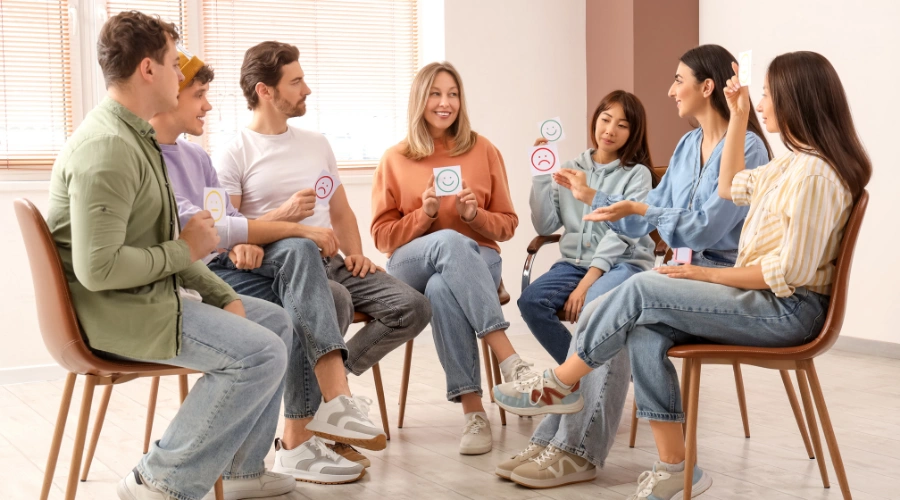
1. Recovery bingo
Purpose: Build common ground, reduce isolation, and introduce recovery behaviors.
Create bingo cards with experiences or healthy actions rather than numbers. Squares might include “used a grounding skill,” “asked for help,” “attended a support meeting,” “set a boundary,” or “planned a sober activity.”
Participants can move around the room and find someone who relates to a square, or the facilitator can read prompts while members mark their own cards. No one should be required to explain a square in detail.
Debrief questions:
- Which experience was more common than you expected?
- Which recovery action would you like to practice this week?
- Did you notice a place where you felt alone before the game?
Solo adaptation: Use a personal card as a weekly habit tracker. Mark each healthy action when it happens and write one sentence about what helped.
Facilitator note: Keep prompts broad and strengths-based. Avoid squares that force disclosure of relapse, trauma, or criminal behavior.
2. Recovery Jeopardy
Purpose: Reinforce recovery knowledge through active recall and teamwork.
Create categories such as “Triggers and Coping,” “Relapse Prevention,” “Healthy Routines,” “Communication,” and “Recovery Myths.” Teams choose a question and discuss the answer before responding.
Questions can be practical:
- Name two early warning signs of relapse.
- What does HALT stand for?
- Give one assertive way to decline a drink.
- Name a healthy action that can interrupt a craving.
The facilitator should explain the answer and correct myths without turning the game into a lecture.
Debrief questions:
- Which answer surprised you?
- Which skill do you understand better now?
- How did your team handle disagreement?
Solo adaptation: Turn the questions into flashcards and review them for five minutes each day.
Facilitator note: Keep reading demands reasonable and let teams discuss. The goal is learning, not proving who has the most education.
3. Trigger-to-tool match
Purpose: Connect personal triggers with specific coping strategies.
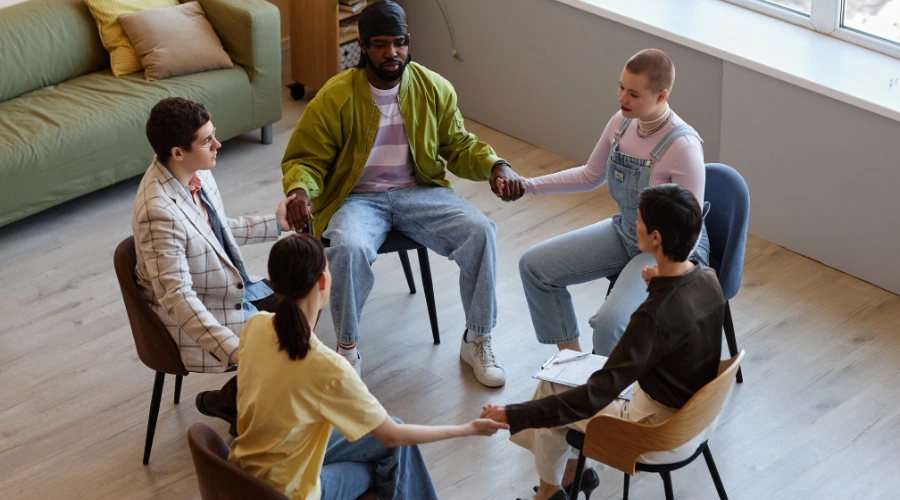
Prepare one set of cards with common triggers and another with coping tools. Trigger cards might include conflict, payday, loneliness, boredom, pain, a using friend, a celebration, or poor sleep. Tool cards might include calling support, leaving the setting, grounding, eating a meal, attending a meeting, changing a route, or speaking with a clinician.
Small teams match each trigger with one or more tools. There is rarely only one correct answer. The group discusses why a tool may work for one person but not another.
Debrief questions:
- Which trigger needs more than one coping strategy?
- Which tool is easiest to use early?
- What barrier could prevent you from using it?
Solo adaptation: Write five personal triggers on separate cards and build a three-step response for each one.
Facilitator note: Do not ask members to reveal their most sensitive triggers publicly. Generic examples can still teach the skill.
4. Coping skills charades
Purpose: Make coping strategies memorable through movement and laughter.
Write healthy coping actions on slips of paper. Examples include calling a sponsor, taking a walk, journaling, using paced breathing, attending a meeting, preparing a meal, listening to music, or setting a boundary.
A volunteer acts out the skill without speaking while the group guesses. After the answer, ask when and why the skill might help.
Debrief questions:
- Which coping skill was easiest to recognize?
- Which one do you forget to use when stressed?
- What would make the skill easier to access in daily life?
Solo adaptation: Choose a coping card each morning and practice the action before it is urgently needed.
Facilitator note: Never force someone to perform. Participants can draw, describe, or partner with another member instead.
5. Refusal skills role-play
Purpose: Rehearse clear responses to high-risk situations.
Use short, realistic scenarios. One person offers a substance, invites the participant to an unsafe setting, pressures them to skip treatment, or challenges a new boundary. The participant practices a brief response and an exit plan.
Useful response styles include:
- Direct: “No. I do not drink anymore.”
- Boundary plus action: “I am leaving if drugs are here.”
- Broken record: Calmly repeat the same answer without arguing.
- Redirect: Suggest a different sober activity.
- Support call: End the interaction and contact a recovery person.
Debrief questions:
- Which response felt natural?
- What made it harder to hold the boundary?
- What is your exit plan after saying no?
Solo adaptation: Write and rehearse three refusal phrases aloud. Pair each phrase with a transportation or support plan.
Facilitator note: Keep the role-play brief and avoid aggressive reenactments. The aim is confidence, not emotional flooding.
6. Relapse prevention scavenger hunt
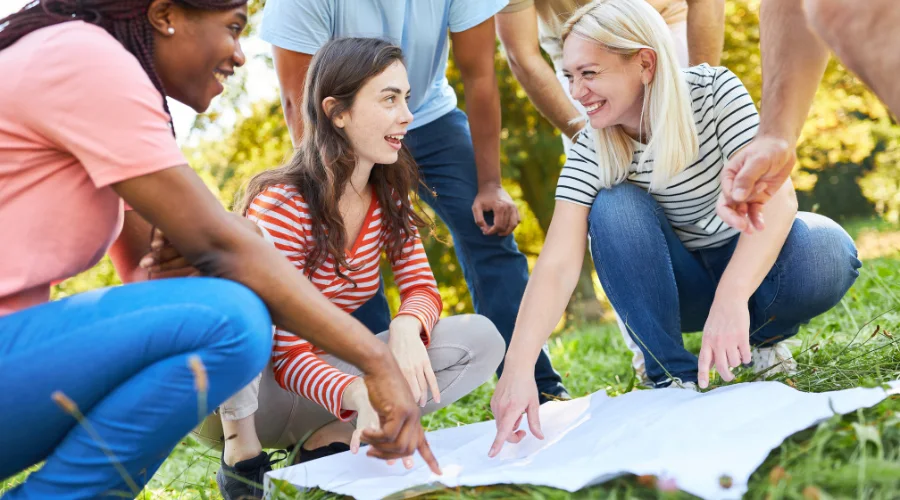
Purpose: Help participants identify recovery resources in their environment.
Create a list of items or observations connected to relapse prevention. In a treatment setting, participants might locate:
- A quiet place to use a grounding skill
- A person they can ask for support
- A written schedule or meeting time
- A healthy snack or hydration option
- An object that represents a recovery value
- A route away from a high-risk area
Teams complete the hunt, then explain how each item supports recovery. A seated version can use photographs, cards, or items placed around the room.
Debrief questions:
- Which resource had you overlooked?
- What resource will be available after discharge?
- What is missing from your current relapse-prevention plan?
Solo adaptation: Walk through your home or neighborhood and create a personal map of safe places, support contacts, and healthy activities.
Facilitator note: Set clear boundaries for where participants may go. Do not turn the activity into a race that excludes people with limited mobility.
7. Values and goals vision board
Purpose: Help participants picture an identity and future beyond active addiction.
Provide magazines, printed images, paper, markers, and adhesive. Invite participants to choose words and pictures connected to health, relationships, work, spirituality, stability, creativity, or service.
The board should reflect values, not only possessions or distant outcomes. A participant might choose “reliability,” a family meal, a peaceful home, a training certificate, or a trail that represents steady progress.
Debrief questions:
- Which value appears most clearly on your board?
- What small action supports that value this week?
- What part of the board represents your future self?
Solo adaptation: Create a digital or paper board and place it where you make daily decisions. Add one specific action under each major value.
Facilitator note: Emphasize meaning rather than artistic skill. Provide words and symbols for participants who do not enjoy drawing or collage work.
8. Strengths web
Purpose: Build self-esteem and help group members identify useful qualities.
One participant writes their name in the center of a page. Group members add observed strengths around it, such as persistence, honesty, humor, patience, courage, or willingness to help. Each strength should be tied to a specific behavior rather than empty praise.
The participant then circles two strengths they want to use more intentionally in recovery.
Debrief questions:
- Which strength was difficult to accept?
- How has one strength already helped your recovery?
- Where could that strength become unbalanced or need support?
Solo adaptation: Build a strengths web using feedback from past teachers, employers, family members, or recovery peers. Add evidence for each strength.
Facilitator note: Use this activity only after basic trust has formed. Monitor sarcasm and make sure every member receives thoughtful feedback.
9. Grounding skills lab
Purpose: Let participants test several stress-management tools and identify personal preferences.
Set up short stations or rounds with different grounding techniques:
- Paced breathing
- The 5-4-3-2-1 senses exercise
- Stretching or slow movement
- Holding a textured object
- Naming objects of one color
- Brief guided imagery
- Writing a one-sentence self-compassion statement
Participants rate distress or tension before and after each technique using a simple 0-to-10 scale. The goal is not to find a universal winner. It is to build a personal coping menu.
Debrief questions:
- Which skill changed your body fastest?
- Which skill felt uncomfortable or unhelpful?
- Which tool can you use discreetly in public?
Solo adaptation: Test one technique per day and record the setting, stress level, and result.
Facilitator note: Some people feel more distressed when closing their eyes or focusing on breathing. Always offer eyes-open, movement-based, and externally focused options.
10. Letter to your future self and milestone map
Purpose: Strengthen motivation and connect daily actions to long-term recovery goals.
Participants write a letter from the perspective of their future self. They describe what life looks like, which relationships have changed, what routines support recovery, and how they handled difficult moments.
Next, they create a milestone map with several realistic steps between today and that future. Steps might include completing treatment, attending the first community meeting, scheduling therapy, creating a budget, applying for work, or repairing a daily routine.
Debrief questions:
- What does your future self thank you for doing now?
- Which milestone is within your control this week?
- Who can support the next step?
Solo adaptation: Seal the letter and choose a date to reopen it. Review the milestone map monthly and revise it without treating changes as failure.
Facilitator note: Avoid promises that everything will be perfect. Encourage a hopeful but realistic picture that includes coping with setbacks.
Choosing the Right Game for the Group

The best activity depends on the group’s current need.
For a new or guarded group
Start with recovery bingo, Recovery Jeopardy, or trigger-to-tool matching. These activities offer structure and do not require deep disclosure.
For a group working on relapse prevention
Use refusal skills role-play, the scavenger hunt, or trigger-to-tool matching. These activities focus on high-risk situations and practical response plans.
For low energy or poor engagement
Coping skills charades and Recovery Jeopardy can raise energy. Keep the competition cooperative and avoid embarrassing anyone who is slow to respond.
For anxiety or emotional overload
Use the grounding skills lab. It gives participants several practical tools and respects individual differences.
For identity and motivation work
Use the vision board, strengths web, or future-self letter. These activities help participants see recovery as building a life, not only avoiding a substance.
Solo Recovery Games and Activities Between Groups
Group connection is valuable, but recovery also happens in ordinary moments between sessions. Several activities above work well alone:
- Use recovery bingo as a weekly habit tracker.
- Turn Recovery Jeopardy questions into flashcards.
- Build a trigger-to-tool deck for your most common situations.
- Draw one coping-skill card each day and practice it.
- Rehearse refusal phrases before a social event.
- Create a personal scavenger hunt for local recovery resources.
- Add one image to a values board each week.
- Keep a strengths web in a journal.
- Test grounding skills and record which ones help.
- Revisit a future-self letter and milestone map monthly.
Solo activities are most useful when they connect back to a therapist, sponsor, peer group, or treatment plan. They should increase support, not become another reason to isolate.
Common Mistakes to Avoid
Recovery activities can lose their value when facilitators:
- Choose a game only because it is entertaining
- Force members to disclose personal details
- Use competition to shame or rank participants
- Skip the debrief
- Ignore mobility, literacy, culture, or trauma needs
- Let one confident member dominate
- Use scenarios that glamorize substance use
- Treat a game result as a clinical diagnosis
- Repeat the same activity until it feels routine
A strong facilitator watches group dynamics and changes the plan when needed. Flexibility is part of evidence-informed group care.
Have Fun While Forging a Foundation in Recovery at Ingrained
Ingrained Recovery offers group therapy for addiction recovery as part of our programs in Eastman, Georgia. Group work helps clients practice communication, receive peer support, and apply relapse-prevention skills within a structured community.
Interactive exercises will be combined with individual therapy, experiential activities, family involvement, and discharge planning. While our clients often have fun and enjoy sugh games, the goal is not to make treatment feel like a game. It is to make important skills easier to understand, remember, and use.
Call our admissions team to learn how our residential addiction treatment program helps build coping skills, connection, and a stronger recovery plan. Reach out confidentially today for more information.
Many Forms of Insurance Accepted
Find Help At Ingrained Recovery
Frequently Asked Questions About Recovery Group Games
What are the best recovery games for a new group?
Low-pressure activities such as recovery bingo, Recovery Jeopardy, and trigger-to-tool matching are often a good starting point. They create structure and common ground without requiring deep personal disclosure.
Are recovery games appropriate for adults?
Yes, when the language, materials, and purpose respect adult participants. Explain the clinical goal, avoid childish rewards, and connect the activity to real situations involving work, family, stress, and relapse prevention.
How long should a recovery activity take?
Many activities fit within 15 to 40 minutes, followed by a short debrief. Creative work such as vision boards may take longer. The facilitator should protect enough time for reflection rather than rushing to finish the game.
Can games help with relapse prevention?
They can help participants rehearse coping skills, identify triggers, practice refusal language, and create response plans. The activity supports relapse prevention when it is connected to the person’s larger treatment and support plan.
What should a facilitator do when someone does not want to participate?
Offer a pass, observer role, partner option, or alternate prompt. Pressure can damage trust. A private check-in may clarify whether the activity created anxiety, confusion, cultural discomfort, or a trauma response.
Can these activities be used outside formal treatment?
Many can be adapted for peer-support meetings, sober-living communities, families, or individual practice. Clinical groups should still be led according to the organization’s policies and the facilitator’s training.
References
- Center for Substance Abuse Treatment. (2005). Substance abuse treatment: Group therapy (Treatment Improvement Protocol Series 41; HHS Publication No. SMA 15-3991). Substance Abuse and Mental Health Services Administration. https://library.samhsa.gov/product/tip-41-substance-abuse-treatment-group-therapy/sma15-3991
- Martínez-Miranda, J., & Espinosa-Curiel, I. E. (2022). Serious games supporting the prevention and treatment of alcohol and drug consumption in youth: Scoping review. JMIR Serious Games, 10(3), e39086. https://doi.org/10.2196/39086
- National Institute on Drug Abuse. (2025, June 9). Treatment. https://nida.nih.gov/research-topics/treatment
- Wendt, D. C., & Gone, J. P. (2018). Complexities with group therapy facilitation in substance use disorder specialty treatment settings. Journal of Substance Abuse Treatment, 88, 9-17. https://doi.org/10.1016/j.jsat.2018.02.002