
Get Guidance on Crafting a Powerful Farewell to Addiction Letter
A goodbye letter to addiction is a personal writing exercise about what substance use has meant to you, what you want to change, and the support you want next. Use the prompts and example below in your own words. You can keep your letter private, share it with someone you trust, or start with a letter about change if goodbye does not feel right yet.
Writing in your own words
Choose a prompt that helps you begin. You can leave a section unfinished, use extra paper, or stop and come back later. The letter can include mixed feelings. You decide whether to share any part of it.
Six writing starters
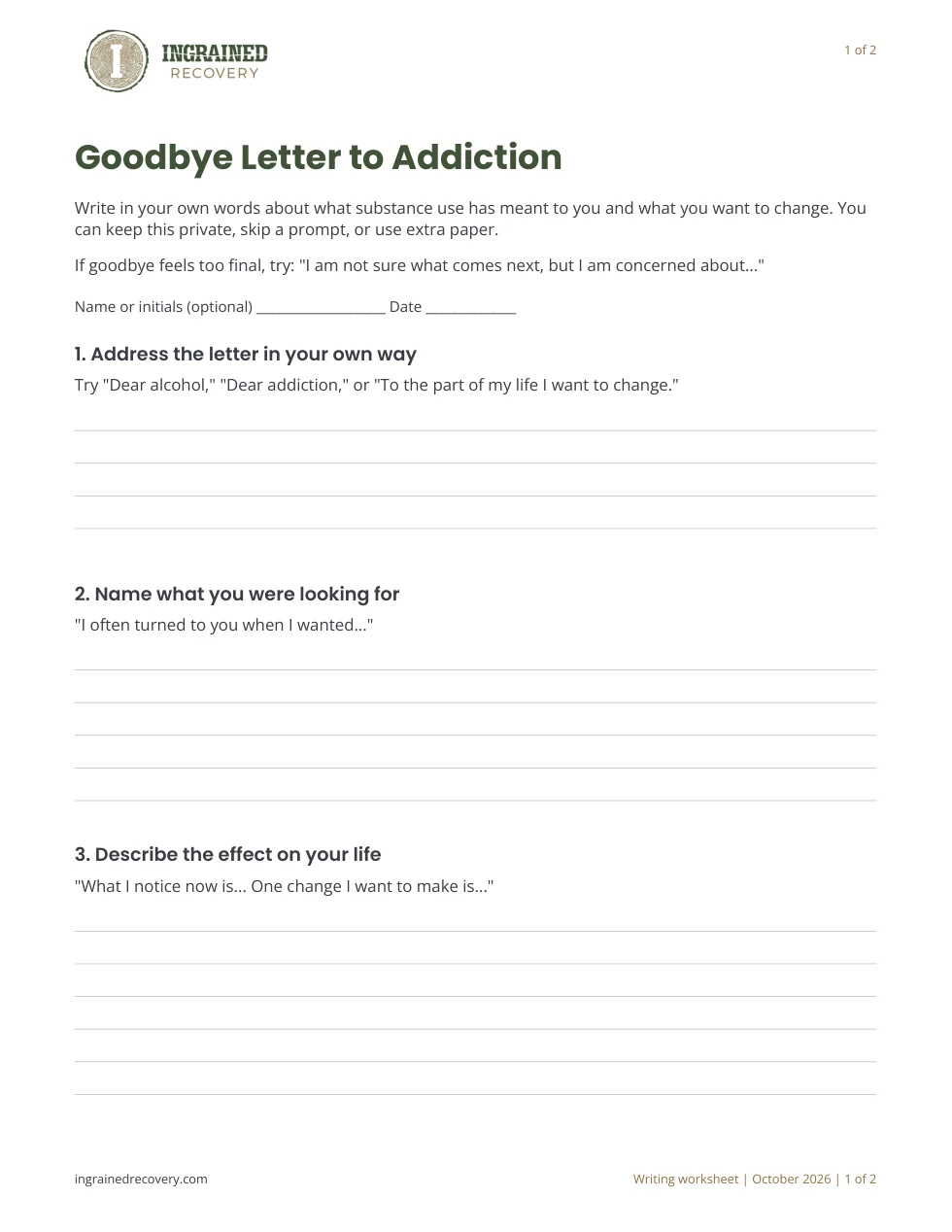
1. Address the letter in your own way
Try “Dear alcohol,” “Dear addiction,” or “To the part of my life I want to change.”
2. Name what you were looking for
“I often turned to you when I wanted…”
3. Describe the effect on your life
“What I notice now is… One change I want to make is…”
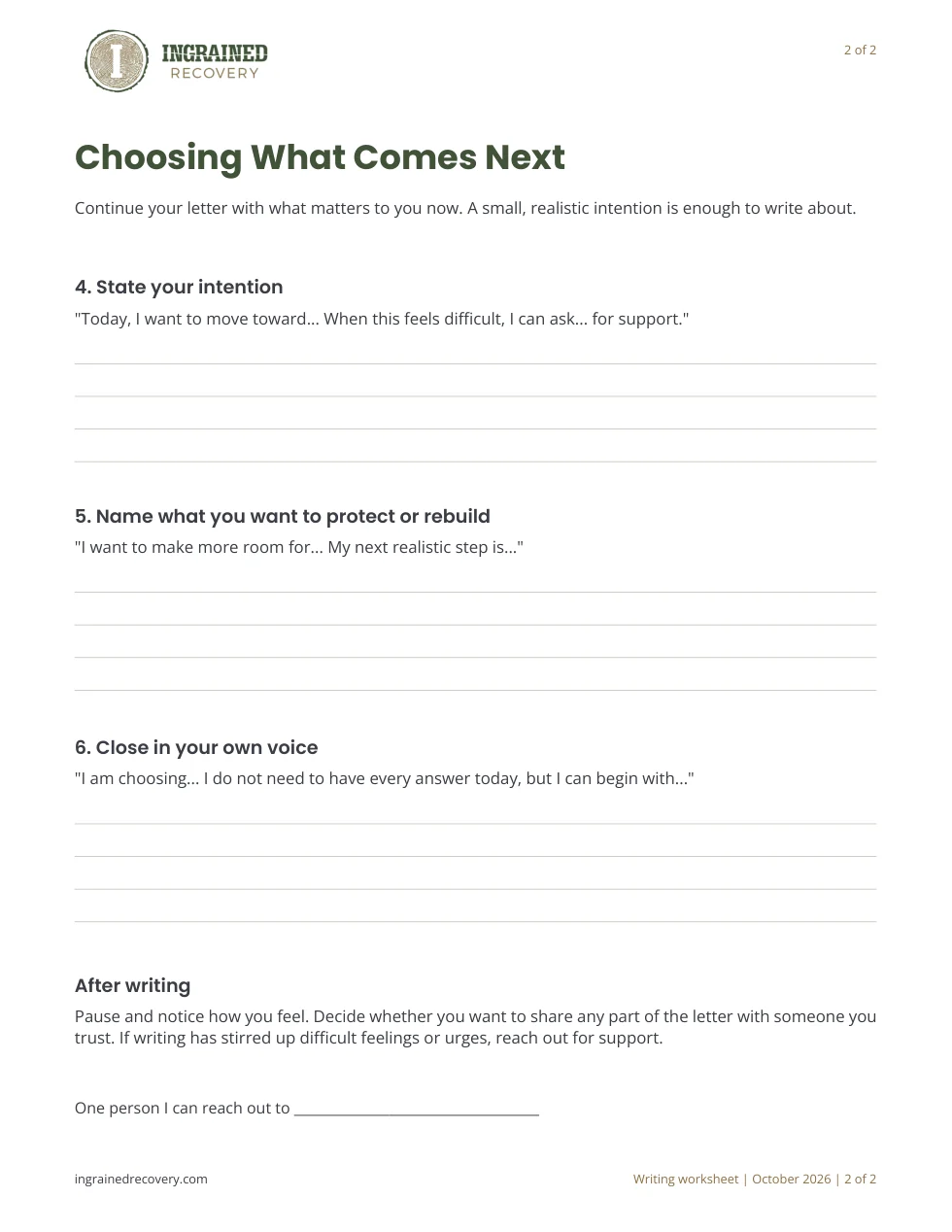
4. State your intention
“Today, I want to move toward… When this feels difficult, I can ask… for support.”
5. Name what you want to protect or rebuild
“I want to make more room for… My next realistic step is…”
6. Close in your own voice
“I am choosing… I do not need to have every answer today, but I can begin with…”
Goodbye letter worksheet previews
These two pages show the worksheet layout. The same six writing starters are available as text above.
You can also download the PDF version of our Goodbye Letter to Addiction Worksheets with the button below.
An Illustrative Addiction Goodbye Letter Format
This example is fictional. Use it as a starting point for your own words.
Dear addiction,
I often turned to you when I wanted relief from stress or a break from feelings I did not know how to handle. I can acknowledge what I was looking for while recognizing the ways substance use has affected my health and relationships.
I want more room in my life for being present, keeping commitments, and asking for help before I feel overwhelmed. I do not expect everything to change at once. Today, I can contact someone I trust and talk about the support I need.
I may still have difficult feelings and urges. When they show up, I want to use the plan I make with my care team and reach out for support. This letter is a reminder of what I want to move toward.
Sincerely,
[Your name or initials]
If goodbye feels too final
You can begin with: “I am not sure what comes next, but I am concerned about… What I want to understand better is… One kind of support I am willing to consider is…”
After writing
Pause and notice how you feel. Decide whether you want to share any part of the letter with someone you trust. If writing has stirred up difficult feelings or urges, reach out for support.
What if I am writing about someone I love?
A loved one’s letter has a different purpose. Write about your own experience, the support you can offer, and the boundaries you need. Leave decisions and commitments about another person’s recovery in their own voice.
Explore Detox and Rehab Options
Find Help At Ingrained Recovery
Connect with Ingrained Recovery for Treatment Support
Contact Ingrained Recovery to ask about treatment options and available support.
All calls are confidential, so please reach out for supportive options and assistance today.